


Some rooms impress quickly and date even faster.
They arrive with intensity. They feel current. They feel styled. They feel very sure of themselves for about eleven minutes. And then, a few years later, they begin to look like a collection of confident decisions made under temporary influence.
The rooms that age well operate differently.
They are not built on novelty. They are built on substance. They still feel grounded years later because their materials were honest, their proportions were disciplined, and their style was rooted in something deeper than trend appetite. They may evolve. They may soften. They may collect a little more patina, a few better books, a more lived-in spirit. But they do not collapse under the weight of time.
That is especially important in a Western home.
Western furniture often carries more visual identity than generic furniture does. It has material weight, texture, character, and a strong sense of place. Which means when it is chosen well, it can become truly timeless. But when it is chosen poorly, or overapplied, it can date a room faster than people expect.
The difference comes down to judgment.
A Western room that ages well does not chase whatever feels newly dramatic. It leans into craftsmanship, restraint, proportion, warmth, and material combinations that deepen rather than expire. It understands that longevity is not just about durability. It is about taste that can survive its own first impression.
If you want a Western room that still feels good ten years from now, here is what to prioritize.
Choose materials that improve with time
The first rule of a room that ages well is simple: start with materials that become more beautiful as they are lived with.
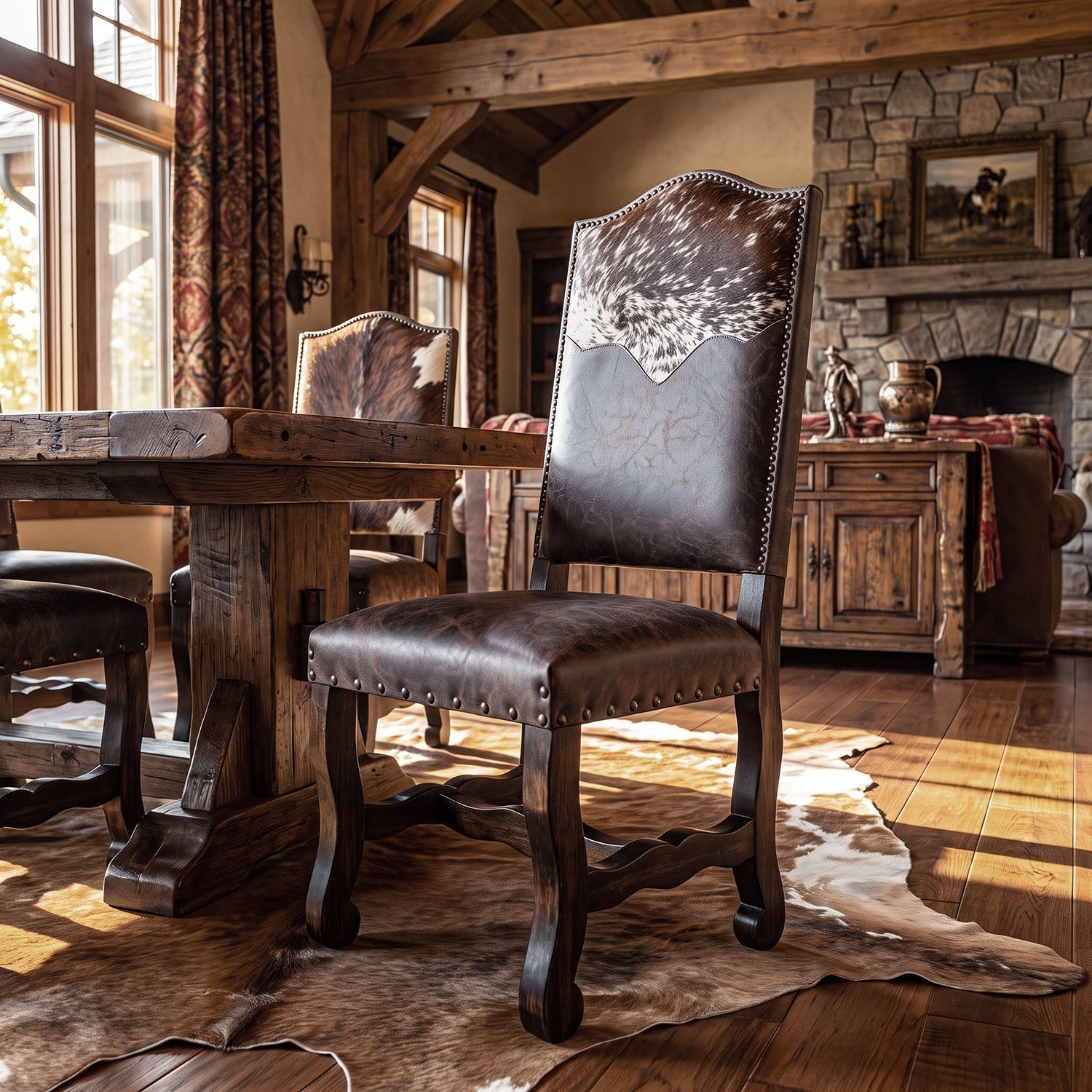
That immediately gives an advantage to real wood, quality leather, iron, wool, linen, hide in measured doses, and natural finishes with depth. These materials do not usually peak on delivery day. They soften, warm, patina, and gain character through use. That is precisely why they remain interesting.
Rooms built from surfaces that need to stay perfect in order to stay attractive tend to age nervously. Rooms built from honest materials tend to age with dignity.
Materials that usually age well in Western interiors:
• rich wood with visible grain
• quality smooth leather
• lightly distressed or hand-finished wood
• aged iron and forged metal
• wool rugs and woven textures
• linen and natural upholstery blends
Our Handmade Craftsmanship page is relevant here because rooms that age well usually begin with furniture and materials that are built with long-term character in mind.
Favor strong silhouettes over decorative trend flourishes
A room ages well when the main furniture forms are strong enough to hold the room without relying on temporary styling habits.
This is where silhouette matters enormously. Clean arms, confident lines, balanced shaping, and well-judged scale will usually outlast whatever decorative trend is currently charming the internet. Pieces with good bones tend to survive shifts in fashion because they do not depend entirely on embellishment to matter.
This does not mean Western rooms should be stripped of character. It means the character should be anchored in form and material first, detail second.
Better long-term bets usually include:
• sofas with balanced profiles rather than overly fussy detailing
• dining chairs with good structure and restrained ornament
• beds with strong proportion and enduring material presence
• consoles and buffets where carving enhances the form instead of overpowering it
Collections like Western Leather Sofas, Western Dining Chairs, Western Beds, and Western Consoles are strongest when viewed through this lens: not just what is striking now, but what still makes visual sense later.
Restraint ages better than intensity
This is one of the harshest truths in decorating, and one of the most useful.
Rooms that do too much rarely age gracefully.
Too many motifs, too many competing textures, too many literal Western signals, too much decoration stacked into every sightline — all of it may feel “finished” in the short term, but often becomes visually tiring over time. The room starts to feel overcommitted to one version of itself. There is no room left for maturity.
Restraint, by contrast, leaves space for the room to evolve.
Aging-well rooms usually know how to:
• let one or two materials lead
• use hide, embossing, fringe, or carving selectively
• keep small décor from becoming a competing chorus
• maintain visual calm around stronger statement pieces
A room with discipline can always become richer later. A room that is already shouting at full volume has fewer places to go.
Color palettes should feel rooted, not restless
Rooms that age well usually have color palettes that feel anchored in material truth rather than trend enthusiasm.
That tends to mean warm neutrals, rich earth tones, bone, charcoal, tobacco, olive, aged wood tones, stone-inspired hues, and controlled contrast. These colors work because they belong naturally to the materials that Western interiors already use well.
By contrast, highly trend-driven color moments can age a room more quickly when they are pushed too hard into large furnishings or dominant finishes.
Longer-lasting palette directions often include:
• tobacco and saddle tones
• camel and warm taupe
• charcoal and cream
• muted terracotta
• aged walnut and weathered oak tones
• restrained black for definition
It is not that bolder color can never work. It is that rooms built on grounded tones have more room to absorb change gracefully.
Quality reads differently over time
One of the reasons cheap decisions reveal themselves eventually is that time removes the distraction of newness.
At first, many things can look appealing. Fresh upholstery, a strong stain color, an attractive silhouette, a momentary sense of completion. But over time, rooms reveal which pieces were truly built well. Cushions flatten, finishes dull badly, seams weaken, proportions feel increasingly wrong, hardware starts to feel cheaper than the room deserves.
Quality, by contrast, becomes more convincing over time.
This is why our guide on How to Spot Quality in Western Furniture pairs so naturally with this topic. Rooms age well partly because the furniture inside them was worthy to begin with.
Good quality tends to age better because:
• materials wear with character instead of collapse
• comfort holds longer
• construction remains trustworthy
• finishes deepen instead of cheapen
• the room feels intentional even after the novelty is gone
Mix warmth and structure
Western rooms that age well usually get the balance right between softness and backbone.
If a room is all ruggedness, it can become visually heavy over time. If it is all softness, it may lose presence. The strongest long-term rooms understand contrast: leather next to linen, iron near wood, heavier case goods beside lighter upholstery, a structured table under more relaxed textiles.
This mix keeps the room from becoming either stern or flimsy as tastes evolve.
Helpful balancing pairings include:
• leather + linen
• iron + wood
• carved furniture + simpler upholstery
• wool textures + smoother surfaces
• darker anchor pieces + lighter surrounding layers
This also ties naturally into our article on The Most Expensive-Looking Material Pairings. Rooms that age well often look expensive for the same reason: their materials are working together instead of trying to outperform one another.
Don’t decorate the room into a corner
One of the most overlooked reasons a room ages badly is that it leaves itself no flexibility.
Everything is too specific. Too matched. Too locked into one mood. Too dependent on a narrow trend or tightly coordinated look. The homeowner cannot evolve the room without replacing half of it, so the whole space starts to feel frozen in a particular year.
A room that ages well leaves space for adjustment.
Leave flexibility by:
• choosing foundational furniture with broad staying power
• letting pillows, throws, and smaller accents carry more seasonal change
• avoiding over-matching sets wherever possible
• keeping the main material palette strong but adaptable
That kind of flexibility is not indecision. It is strategic maturity. A room should be able to grow up with you.
Buy pieces with emotional staying power
There is a kind of furniture that remains beloved because it is not merely useful or attractive. It means something.
That emotional staying power matters more than people admit.
A hand-carved dining table that has hosted holidays. A leather chair that feels better every year. A bed that gives the whole room gravity. A console that makes the entry feel settled the moment you walk in. These are the pieces that often stay, even as other parts of the room evolve.
Rooms age well when they are anchored by pieces that are genuinely worth keeping.
Ask of a major piece:
• would I still want this if trends shifted completely?
• does it have enough substance to earn long-term space?
• does it feel grounded in material truth?
• will it gain character through use?
If the answer is yes, the room has a stronger future.
Avoid letting the room become too “theme aware”
This is especially important in Western interiors.
A room ages better when it feels rooted in a worldview rather than overly committed to a theme. The moment a room starts to look like it is constantly reminding you what style it belongs to, it begins shortening its own lifespan.
Western design is at its most timeless when it is expressed through materials, comfort, craftsmanship, and atmosphere rather than novelty motifs or over-literal styling. The room should feel unmistakably Western in soul, not anxious to prove the point every twelve inches.
To keep the room timeless:
• favor material character over decorative clichés
• use strong Western notes selectively
• let architecture and layout support the mood
• choose warmth and authenticity over gimmickry
Rooms with real confidence do not overintroduce themselves.
Good lighting helps a room mature well
Lighting is one of the quiet reasons some rooms continue to feel right over time.
A room that depends entirely on one harsh overhead source will almost never grow more appealing with age. Good rooms use layered light. They allow evening to be flattering. They let materials read warmly. They support the emotional tone of the house after dark, which is when many people actually experience their rooms most fully.
Lighting that ages well usually includes:
- warm table lamps
- layered sources rather than one dominant beam
- overhead fixtures with visual weight and softness
- enough glow to make materials feel rich, not flattened
Our Western Lighting collection naturally belongs in this conversation, because rooms that age well are rarely lit like afterthoughts.
Texture matters more than trend
A room that lacks texture often ends up borrowing its interest from whatever styling trend is circulating at the time. That is risky.
A room with real texture does not need trend props to stay alive.
Wood grain, leather depth, wool softness, linen ease, iron line, stone presence, and layered textiles all help keep the room visually engaging through years of use. Texture gives the room lasting interest in a way trend accessories rarely can.
Lasting texture often comes from:
• leather seating with depth and hand-feel
• rugs with substance and warmth
• pillows and throws that add tactile contrast
• wood surfaces that show grain and finish variation
• metal details that add edge without flash
Our Western Area Rugs, Western Pillows and Throws, help reinforce that long-game approach.
Let the room reflect life, not just styling
Rooms that age well do not remain frozen in their first version. They gather evidence of life.
A few better books. A softened leather arm. A slightly deeper wood tone. Objects that were actually chosen over time. A rug that has become part of the household rhythm. These details do more for long-term beauty than perfection ever will.
The room should feel lived with, not preserved in ceremonial conditions. It should become more itself over time, not less.
The best Western homes are not only styled well. They are built for the kind of life that makes style deepen naturally.
So what makes a Western room age well?
In the end, it comes down to a few disciplined choices made early and repeated consistently.
A Western room ages well when it has:
• honest materials that improve with time
• strong silhouettes instead of trend-heavy forms
• restraint in motifs and decorative intensity
• a grounded palette
• real quality at the foundation
• a balance of warmth and structure
• flexibility to evolve gracefully
• pieces with emotional staying power
• lighting and texture that mature with the room
That is the difference between a room that merely arrives well and a room that continues to live well.
And in a Western home, that may be one of the clearest signs of real quiet luxury: not that the room impressed immediately, but that it still feels right long after the first impression has had every chance to wear off.
More Design Guides:
Decorating Around One Hero Piece


Share:
Designing a Western Home for Conversation
The Western Housewarming Guide for Grown-Ups