

It’s usually the smallest thing that tells you.
Not the slammed door. Not the raised voice. Not the long silence after dinner.
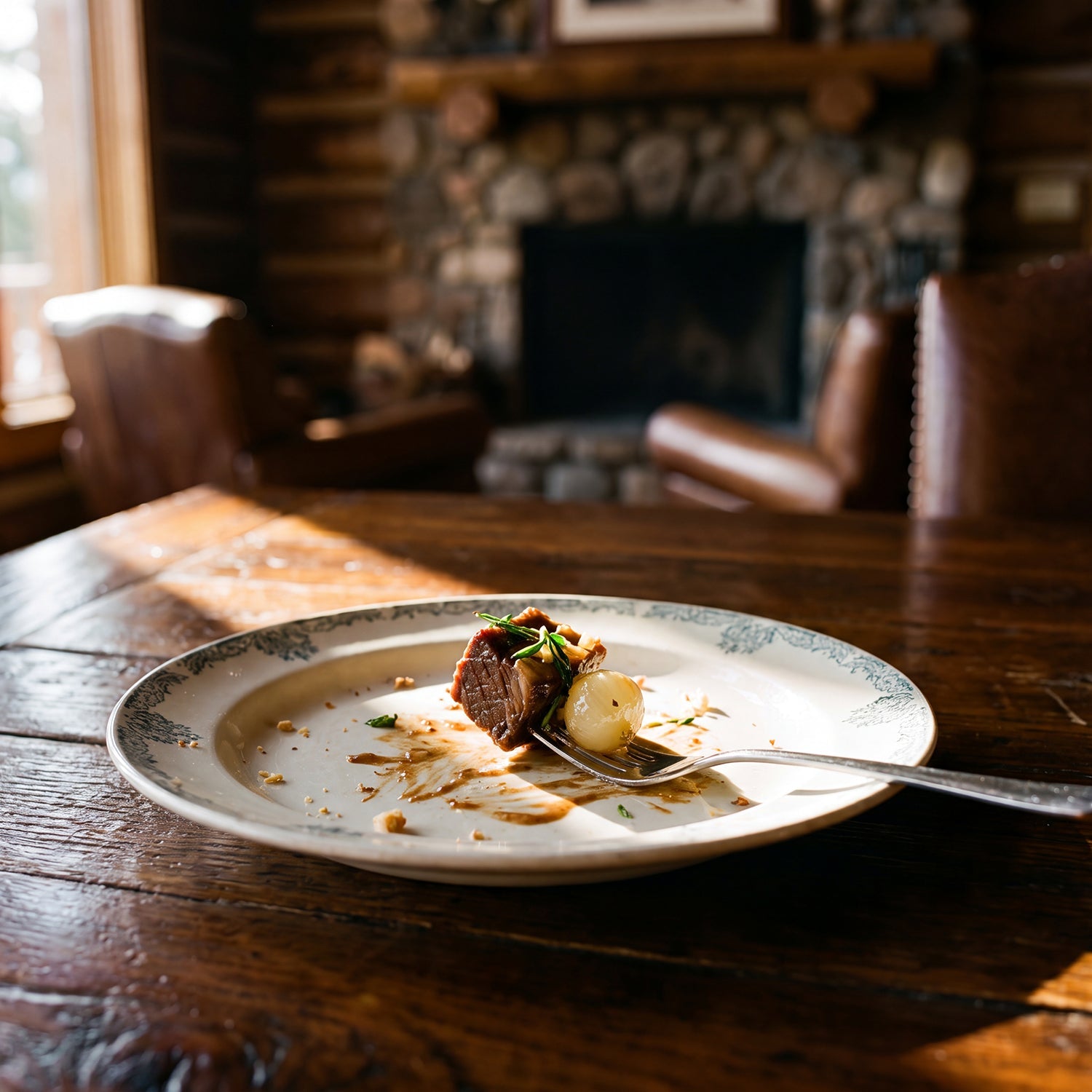
Just one bite left on the plate.
A corner of biscuit. A forkful of potatoes. The last piece of meat cut small and left untouched. Nothing dramatic. Nothing that asks to be noticed.
Most nights, you scrape it away without thinking.
But every now and then, you stop.
Because that last bite feels like it’s trying to say something.
Appetite Has a Language
People tell you things long before they say them out loud.
They tell you by how they come through the door. By whether they take their hat off slow or toss it down heavy. By whether they sit close to the table or lean back like they’re already somewhere else.
And sometimes, they tell you by what they don’t finish.
A full plate can mean comfort.
An empty plate can mean hunger finally met.
But the last bite left behind can mean a hundred different things.
Someone was tired. Someone was worried. Someone didn’t want to talk. Someone’s heart was too crowded for supper. Someone sat down because they knew they should, but their body was honest enough not to pretend everything was fine.
That’s the thing about a table.
It doesn’t just hold food.
It holds the truth people carry in with them.
Care Often Starts With Noticing
There is a kind of love that asks questions.
And there is a kind of love that waits first.
It sees the last bite on the plate and doesn’t turn it into a lecture. It doesn’t make a scene. It doesn’t embarrass someone at the table by asking too much in front of everybody.
It simply notices.
Later, maybe, when the dishes are done and the house has quieted, it says, “You alright?”
Softly.
Not to corner them.
Just to open the gate.
Because sometimes people need room before they need words.
The Last Bite Can Be a Sign of Change
There are seasons when the people we love begin changing in ways we don’t want to admit.
A child who used to clean the plate now pushes food around, distracted by a world getting bigger than the kitchen.
A parent who once ate with appetite starts leaving more behind.
A spouse sits at the table, but some part of them seems far away.
A friend visiting after a hard year says they’re fine, but their fork says otherwise.
These are quiet things.
Easy to miss if you’re moving fast.
But homes teach us to pay attention. Not in a suspicious way. Not in a fearful way. In a loving way.
The kind of attention that says, I know your rhythms. I know when something is different. I know when the plate is telling me what your mouth won’t.
Sometimes the Bite Left Behind Is Mercy
Not everything unfinished is failure.
Sometimes leaving the last bite is simply the body saying enough.
Enough for now.
Enough conversation.
Enough pretending.
Enough holding it together at the table.
There is mercy in knowing when to stop.
The West has always understood limits. You don’t push a tired horse past wisdom. You don’t ignore a storm building over open country. You don’t pretend the body doesn’t know things before the mind does.
And maybe the same is true of us.
Maybe some nights, the last bite left on the plate is not waste.
Maybe it is honesty.
A Table Is Where We Learn Each Other
Over time, a family table becomes a kind of record.
You learn who eats fast. Who saves the best part for last. Who talks more when they’re nervous. Who gets quiet when they’re sad. Who always says they aren’t hungry, then reaches for something ten minutes later.
You learn the little patterns that don’t look important until they change.
And that is part of loving someone for a long time.
You learn their ordinary.
Then you learn how to recognize when ordinary has shifted.
Not so you can control them.
So you can care for them better.
This Sunday, Pay Attention Gently
If there is a last bite left on the plate today, don’t rush past it.
Maybe it means nothing.
Maybe supper was simply filling.
Maybe the biscuit was too dry or the coffee came too late or the day was too long.
But maybe it is one of those small signals a home gives you when someone needs tenderness more than correction.
So notice gently.
Ask softly.
Make room.
Because love is not only in the cooking.
It is in the seeing.
It is in knowing when to offer another helping and when to let someone be done.
It is in understanding that a plate can hold more than food.
Sometimes it holds a hard day.
Sometimes it holds a quiet change.
Sometimes it holds the part of a person they are not ready to explain.
And sometimes, the most loving thing you can do is clear the plate without complaint, sit beside them for a while, and let them know there is still a place for them at the table.
Related Reflections:

Share:
The Chair Pulled Out Just a Little
The First Night We Open the Windows