

At first, you don’t notice.
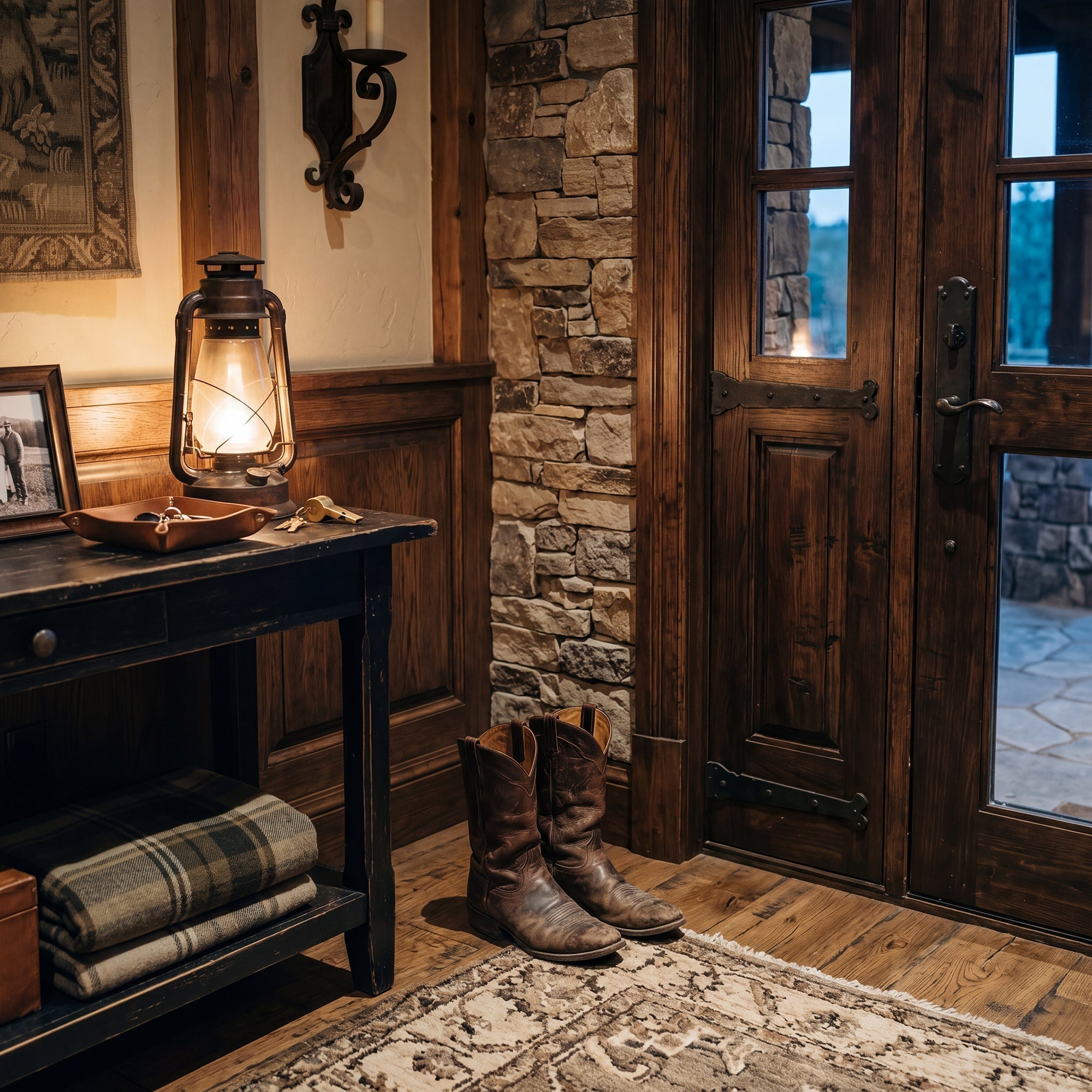
A pair of shoes by the door isn’t a headline. It’s just life. Boots get kicked off. Mud gets left at the threshold. The home keeps absorbing the day like it always has.
Then one morning you realize they’re in the exact same spot they were yesterday.
Not “about the same.” Not slightly turned. Not nudged by a broom or a dog or the ordinary shuffle of a lived-in house.
The same spot.
And something in you registers it before you can talk yourself out of it: those shoes didn’t move because the person who wears them didn’t come through that door the way they usually do.
The House Notices Before We Admit It
Homes are observant in a way people rarely are.
They don’t track calendars. They track patterns. They know which floorboard complains at 6:12 a.m. They know the sound of the same keys landing on the same counter. They know the rhythm of a family moving through rooms without thinking.
So when something breaks that rhythm—when a pair of shoes stays put—the house notices it like a skipped heartbeat.
Sometimes it’s temporary. A trip. A long workday. A late night somewhere else.
And sometimes… it’s not.
Absence Has Its Own Shape
People think absence is empty.
It isn’t.
Absence has weight. It takes up space. It lives in little details that shouldn’t matter but suddenly do.
The mug that stays on the shelf. The chair that doesn’t creak. The porch light that flips on out of habit, even when there’s no reason to leave it on.
And those shoes.
Still. Quiet. Patient.
Like they’re waiting for the world to return to its normal pattern.
Sometimes It’s Not Loss. It’s Distance.
Not every unmoved pair of shoes is tragedy.
Sometimes it’s the slow drift that happens when life gets complicated. When someone is still technically in the story, but no longer in the same chapter. When the home is shared, but the heart isn’t.
The shoes might belong to a teenager who’s growing up and leaving in increments. A spouse who’s working late too often. A parent who’s not moving as easily anymore. A loved one who’s alive, but far away.
The house doesn’t judge the reason.
It just marks the change.
We Keep Things Where We Hope They’ll Return
Here’s the strange thing: most of us don’t move the shoes right away.
We step around them. We leave them as they are. We pretend it’s just temporary, even when our bodies know better.
Because moving them would be an admission.
It would say, out loud: something has shifted. The pattern has changed. The person isn’t coming through the door the same way.
So we let the shoes stay.
Not because we’re messy.
Because hope has a very practical form sometimes.
Hope looks like leaving room at the table. Leaving the porch light on low. Leaving the shoes where they last lived, just in case.
This Sunday, Notice What Your Home Is Telling You
If you have something like that—shoes that didn’t move, a jacket that stayed on the hook, a mug that hasn’t been used—don’t rush to fix it into neatness.
Let it tell you the truth first.
Maybe the truth is grief.
Maybe it’s distance.
Maybe it’s time doing what time does, turning yesterday into a different shape than you expected.
Whatever it is, be gentle with yourself. The noticing isn’t weakness. It’s love paying attention.
And if the person is still reachable—if the door can still open and the shoes can still move—maybe this is the quiet nudge to reach for them.
Not with a speech. Not with a performance.
Just with something real.
Because homes don’t miss people in abstract ways.
They miss them in the smallest places.
Right there, by the door—where the day begins, where the day ends, and where love keeps expecting a familiar step.
Related Reflections:

Share:
The Chair You Sit In When You Don’t Want to Be Seen
The Towel on the Oven Handle