


Quiet luxury is rarely about having more materials.
It is about having the right ones in the right conversation.
That is especially true in a Western home. The difference between a room that feels rich and one that feels noisy usually comes down to pairing, not purchasing. You can have excellent leather, beautiful wood, handsome iron, striking hide, and impressive upholstery all in the same room and still end up with something that feels slightly overfed. On the other hand, a room built from only a few strong materials can feel calm, elevated, and deeply expensive.
This is why the best Western interiors are not just decorated. They are edited.
The strongest rooms tend to rely on material pairings that create tension, contrast, softness, depth, and restraint all at once. They do not let every finish shout. They allow one material to lead, another to support, and a third to keep the whole room from becoming predictable.
That is where the magic is.
Because expensive-looking rooms do not usually come from one dramatic object. They come from relationships. Leather against linen. Iron beside oak. Hide softened by wool. Hammered copper warmed by wood. Plaster near patina. Smoothness beside grain. Discipline beside character.
If you want a Western home that feels layered, refined, and unmistakably well judged, these are the material pairings worth understanding.
Leather and linen: the polished-and-grounded pairing
This is one of the most reliable expensive-looking combinations in any Western home.
Leather brings strength, authority, and permanence. Linen brings softness, air, and ease. Together, they keep a room from leaning too hard in either direction. Leather alone can feel heavy if overused. Linen alone can feel too relaxed if it is not anchored properly. But together, they create one of the cleanest balances in interior design.
In a ranch living room, this might mean a rich leather sofa paired with linen drapery, linen-backed accent pillows, or an upholstered accent chair in a softened neutral. In a bedroom, it may mean a leather bench at the foot of the bed paired with airy bedding and natural woven layers. In a study, it could mean a leather desk chair supported by tailored linen window panels or a restrained linen-blend rug.
Why it works:
• leather adds structure and visual gravity
• linen lightens the mood and softens the silhouette
• the contrast feels tailored, not forced
• both materials age with character when chosen well
Reclaimed wood and iron: the Western backbone
If there is a foundational pairing in Western interiors, this is it.
Reclaimed or richly grained wood brings history, warmth, and visual depth. Iron brings line, discipline, and edge. Together they create a room that feels substantial without becoming bulky.
This pairing is especially effective because each material corrects the excesses of the other. Too much wood can become visually dense. Too much iron can feel cold or severe. When properly balanced, the wood humanizes the iron and the iron sharpens the wood.
This works beautifully in dining rooms, entryways, studies, and living spaces. A wood dining table with an iron base, a console with forged metal details, a bookshelf with dark iron framing, or an iron-legged bench beside a carved wood bed all speak the same language when done well.
Best uses for this pairing:
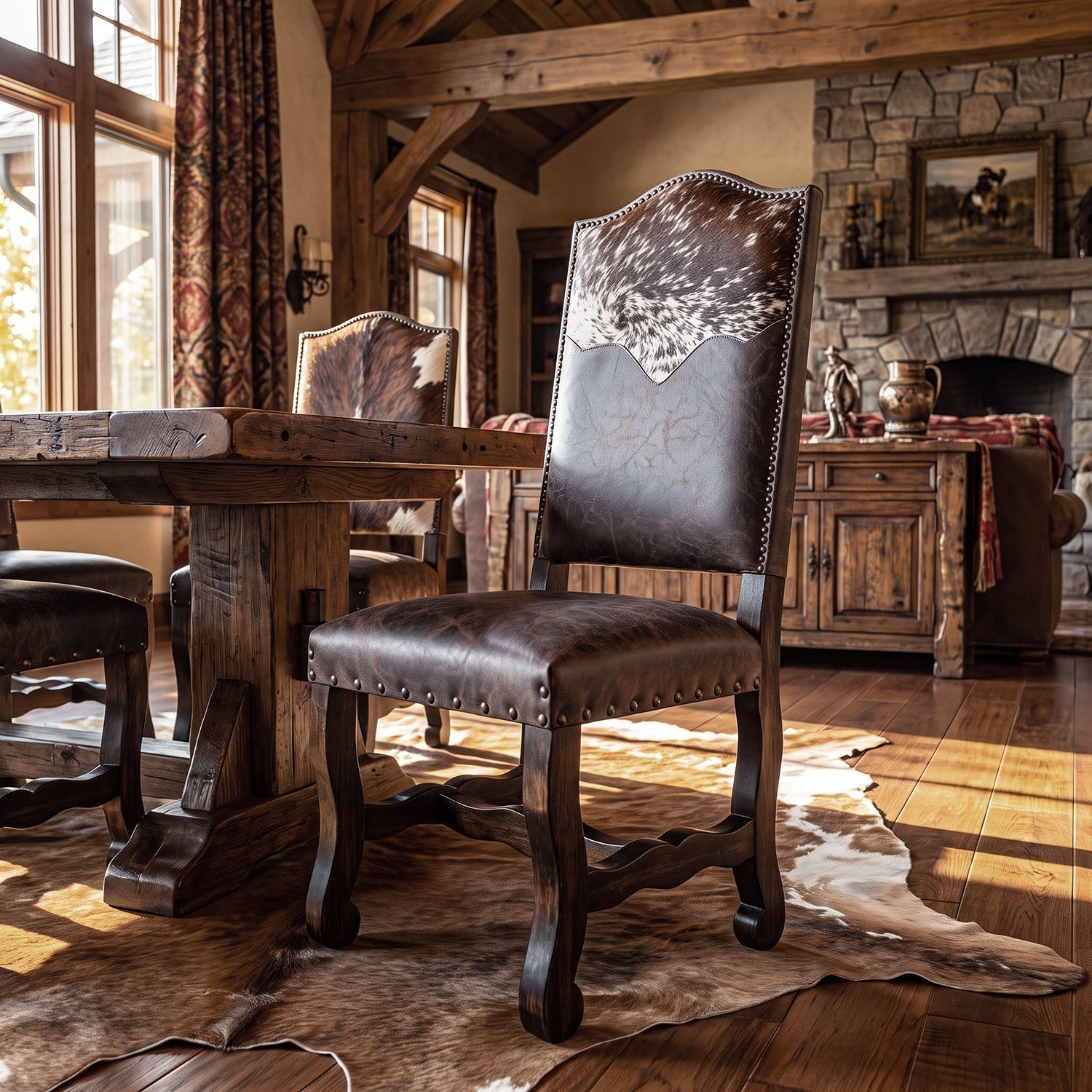
• dining tables and dining chairs
• consoles and sideboards
• coffee tables and accent tables
• desks and office storage pieces
Western Dining Tables, Western Consoles, and Western Desks are especially strong categories for this look.
Hair-on-hide and wool: the pairing that keeps Western style from getting loud
Hide is powerful. It has movement, personality, and immediate Western identity. But that is exactly why it needs a thoughtful partner.
Wool is often that partner.
Good wool introduces calm. It softens the high-contrast energy of hide and helps the room feel intentional rather than overcommitted. When a room uses hide without a quieter balancing texture, the result can start to feel performative. A little too eager. A bit like the room is trying to explain itself before anyone asked.
Wool keeps that from happening.
Think of a hide-covered accent chair with a restrained wool rug. Or a cowhide rug layered near a heavier woven textile elsewhere in the room. Or a hide pillow balanced by wool-blend upholstery and natural-toned throws. The room starts to breathe instead of pose.
Why this pairing reads expensive:
• hide adds pattern and Western identity without print
• wool adds softness and quiet structure
• the room feels layered, not themed
• both materials have tactile richness
This approach can naturally pull from Brazilian Cowhide Rugs, Western Area Rugs, and Western Pillows and Throws.
Hammered copper and aged wood: warm, storied, and quietly dramatic
There are metallic finishes that feel flashy. Hammered copper is not one of them when used correctly.
Paired with aged or richly toned wood, copper can bring extraordinary warmth to a Western room. It catches light beautifully, adds variation, and contributes a handcrafted feel that suits ranch, mountain, and heirloom-driven interiors especially well.
The mistake is using too much of it. Copper works best as a note, not a speech.
A copper accent table near wood seating, a copper-topped occasional piece beside a leather chair, a hammered copper detail in a bar space, or a warm copper lamp base layered into wood-heavy architecture can all create a deeply expensive effect.
Where this pairing works best:
• accent tables
• coffee tables
• bar areas and pub tables
• lamps and smaller decorative accents
Rustic Accent Tables, Western Coffee Tables, and Western Pub & Bar Tables categories give this pairing plenty of room to work.
Embossed leather and clean wood: detail needs restraint
Embossed leather can be magnificent. It can also become a cautionary tale if the rest of the room tries to compete with it.
This is why embossed leather looks most expensive when paired with cleaner wood forms. The wood gives the eye somewhere to rest. It keeps the leather detail from feeling crowded. It lets the embossing read like craftsmanship instead of decoration for decoration’s sake.
This is particularly effective in dining chairs, benches, bar stools, office chairs, and bed details where too much surrounding pattern would cheapen the effect.
The formula here is simple:
• let the embossed leather be the intricate note
• let the wood carry the calmer silhouette
• keep nearby textiles more restrained
• avoid stacking too many ornate details together
Quiet luxury often depends on what you refused to add.
This pairing works especially well across Western Dining Chairs, Western Desk Chairs, and Western Beds.
Leather and plaster-toned walls: the room-level pairing people underestimate
Not every material pairing lives entirely inside the furniture.
Some of the richest Western rooms get their quiet luxury from the dialogue between furniture materials and the architectural envelope around them. Leather against soft plaster-toned walls is one of the best examples. Whether the wall is true plaster, limewashed, heavily textured paint, or simply a warm mineral neutral, the effect is similar: the room feels grounded and elevated at once.
Leather gains softness from the wall. The wall gains authority from the leather. Together they create that quiet, serious atmosphere many expensive homes have without needing to explain how they got there.
This pairing is excellent for:
• living rooms with substantial leather seating
• bedrooms with leather benches or headboard details
• studies with desk chairs or club chairs
• entry spaces with leather-accented benches or chairs
If you want help translating that atmosphere into actual product choices, a Complimentary Design Consultation is a natural step.
Boucle or textured upholstery and dark wood: softness with authority
There is a reason textured upholstery has become such a useful balancing material in refined interiors. It softens stronger lines without dissolving the room’s sense of structure.
When paired with dark wood, boucle or similarly textured woven upholstery can create a room that feels both tailored and approachable. In Western design, this is especially useful because it keeps heavier wood pieces from feeling too stern or overly masculine.
A dark wood dining table with lighter textured chairs. A carved console beneath softer upholstered seating. A heavier bed frame eased by more tactile bedding and nearby textiles. These moves keep the room from becoming visually hard.
Why it works:
• dark wood gives depth and seriousness
• textured upholstery introduces light and relief
• the room feels collected rather than monotone
• it broadens the Western look into something more livable
This is also one of the easiest ways to make Western furniture feel at home in a more transitional interior without losing its soul.
Stone and leather: the refined-rugged combination
Stone has a way of making leather feel even more noble.
Whether the stone appears in a tabletop, a fireplace, architectural surround, lamp base, or flooring context, it gives the room permanence. Leather then adds warmth and usability. The result is a Western interior that feels expensive because it feels built, not simply furnished.
This pairing works especially well in rooms where you want gravitas without heaviness. The stone contributes cool restraint. The leather keeps the room from turning austere.
Useful places for stone-and-leather tension:
• leather seating near limestone or plaster fireplaces
• stone accent tables beside leather chairs
• leather benches in rooms with stone flooring
• bar spaces with stone and leather contrast
Used lightly, this pairing feels architectural. Used well, it feels inevitable.
Iron and linen shades: one of the quietest luxury moves
This is not the loudest pairing in the room, which is exactly why it matters.
Forged iron lighting with linen shades is one of the easiest ways to make a Western room feel edited and mature. The iron gives edge. The linen gives glow. Together they avoid the common trap of lighting that is either too rustic and heavy or too polished and unrelated.
Good lighting is rarely only functional. It is tonal.
Look for this pairing in:
• table lamps on consoles or side tables
• bedside lighting
• entry lighting
• living room layered light sources
Our Western Lighting collection is the obvious companion category here, especially when paired with consoles, nightstands, and accent tables that need warmth as much as function.
Smooth leather and rougher grain wood: one of the cleanest pairings for men’s spaces and studies
There is something deeply effective about smooth, tailored leather against wood that still shows its grain and character. The contrast creates balance without requiring color theatrics or fussy styling.
This pairing shines in offices, libraries, dens, and masculine bedrooms where the room needs to feel serious but not cold. Smooth leather keeps the room feeling composed. Grain-forward wood keeps it honest.
It also travels well into more urban-Western and refined transitional settings, which makes it especially useful for homes that want Western authority without full rustic emphasis.
Excellent applications:
• desk chairs with wood desks
• leather club chairs near grain-heavy side tables
• beds with cleaner leather accents and rustic wood support pieces
• consoles and sideboards with smoother leather-adjacent styling
Our Western Desks and Western Desk Chair collections are also worth a look.
The pairings that usually make a room look cheaper
It helps to know what to avoid too.
Some combinations fail not because the materials are bad, but because they amplify each other’s weaker instincts.
Common trouble spots:
• too many loud materials with no quiet one to ground them
• ornate leather with ornate wood and busy textiles all at once
• multiple competing rustic finishes with no tailored counterpoint
• too much hide without enough softening texture
• shiny metal paired with high-contrast materials in a way that feels more flashy than storied
The rule is not simplicity for its own sake. It is hierarchy. Rooms look expensive when one material leads, one or two support, and the rest know their place. Civilization has been built on lesser principles.
So which material pairings look the most expensive?
If we reduce the entire conversation to the strongest short list, these are the pairings that repeatedly create refined Western rooms:
Top pairings to remember:
• leather + linen
• reclaimed wood + iron
• hide + wool
• hammered copper + aged wood
• embossed leather + clean wood
• leather + plaster-toned walls
• textured upholstery + dark wood
• stone + leather
• iron + linen shades
• smooth leather + grain-forward wood
The best part is that these are not trend pairings. They are durability pairings. They work because each material improves the other.
That is what gives a room depth. And depth, more than novelty, is what people tend to interpret as quiet luxury.
Expensive-looking rooms are usually edited, not overfilled
If there is one final point worth keeping, it is this: the richest-looking Western homes are rarely trying to show every trick at once.
They choose a few strong materials and let those materials carry the emotional weight of the room. They repeat them carefully. They soften them where needed. They contrast them deliberately. They understand that beauty is often a matter of control, not abundance.
That is why good pairings matter so much. They let a room feel storied, tailored, and calm all at once. Which is far more convincing than just making everything dramatic and hoping no one notices the lack of judgment.
Because in the end, the most expensive-looking Western rooms are not simply full of beautiful things.
They are full of beautiful decisions.

Share:
Decorating Around One Hero Piece
How to Use Western Furniture in a Transitional Home