


The Goal Isn’t “Perfect.” It’s “Beautiful for a Long Time.”
Most leather care advice online is written for rooms nobody uses.
“Wipe gently with a damp cloth.”
“Avoid sunlight, pets, kids, and air.”
In other words: enjoy your leather as long as you don’t actually live on it.
Western leather doesn’t have that luxury.
It lives in ranch great rooms and busy family spaces. It sees belt buckles, denim, dogs, dust, and sunsets coming through big windows. It sits under chandeliers, next to stone fireplaces, and in kitchens where the bar stools are full more nights than not.
The goal is not to keep western leather looking brand-new.
The goal is to keep it strong, healthy, and beautiful as it ages.
This guide is about real life with western furniture—sofas, recliners, bar stools, accent chairs, and hair-on hide pieces—in the kinds of homes we actually see every day. Less “museum rules.” More: “What do I do with the leather in my world?”
If you haven’t read it yet, you can pair this article with our Leather Types for Western Furniture Guide for a deeper dive into what each leather actually is. Here, we’re focusing on how those leathers behave and age—and how to take care of them without babying them.
Three Truths About Western Leather Nobody Tells You
Before we jump into routines and products, it helps to reset expectations.
1. Leather itself is tough. The finish is what needs protection.
The hide underneath is one of the toughest natural upholstery materials there is. What you’re really caring for is:
- The dyes that give it color
- The finishes and topcoats that give it protection and sheen
- The oils and moisture that keep it supple instead of dry and cracked
When you treat leather like glass, you underuse it. When you treat it like vinyl, you strip and dry the finish.
Somewhere in the middle is the truth.
2. The room matters as much as the product.
Two identical sofas can age completely differently depending on where they live:
- A high-UV great room with west-facing windows
- A cool, shaded library
- A bar area with constant in-and-out traffic
Same leather, different story.
That’s why we don’t give one-size-fits-all advice. We talk about rooms, light, and lifestyle, not just “wipe with X every Y days.”
3. The little things you do regularly beat a rescue mission every time.
Most damage comes from:
- Neglect + harsh cleaners
- Long-term dryness
- Long-term UV exposure
- Repeated abrasion in the same spot
You don’t need to spend every weekend polishing your sofa. What you do need is:
- A 5–10 minute weekly habit
- A simple seasonal check-in
- A bit of honesty about how hard your household is on furniture
Do that, and your leather doesn’t just survive—it gets better.
Know Your Leather First (So You Don’t Treat It Wrong)
You don’t have to memorize every tannery term. But you do need to know which category you’re living with.
Here’s the short, care-focused cheat sheet:
Full-Grain Aniline
- Look/feel: Very natural, visible grain, rich color variation, soft hand.
- Loves: Real life—families, pets, daily use.
- Hates: Neglect and extreme dryness.
- Care: Regular dusting, mild cleaning, reasonable conditioning; ideal for family rooms.
Semi-Aniline Top-Grain
- Look/feel: Natural grain with a light protective topcoat; still rich but more forgiving.
- Loves: Real life—families, pets, daily use.
- Hates: Neglect and extreme dryness.
- Care: Regular dusting, mild cleaning, reasonable conditioning; ideal for family rooms.
Pigmented / Protected Top-Grain
- Look/feel: More uniform color and grain, slightly cooler or more “finished” surface.
- Loves: Kids, dogs, rentals, heavy use, bar areas.
- Hates: Sharp objects, brute-force scrubbing, solvent-based cleaners.
- Care: Wipe down regularly, avoid harsh chemicals; conditioning is less frequent but still important.
Pull-Up Leather
- Look/feel: Dramatic color shifts where it’s bent or stretched; very Western, very alive.
- Loves: People who like character and patina.
- Hates: Hyper-perfectionists who interpret every mark as “damage.”
- Care: Accept patina, use gentle cleaners, condition carefully to prevent drying.
Nubuck / Suede
- Look/feel: Velvety, soft nap (nubuck from the top side, suede from the underside).
- Loves: Low-traffic, lower-risk spaces.
- Hates: Oils, spills, and rough scrubbing.
- Care: Brush and vacuum gently; keep it away from everyday chaos.
Hair-On Hide
- Look/feel: Hair intact; natural patterns, big Western energy.
- Loves: Backs, sides, accent zones; being brushed with the grain.
- Hates: Constant friction, soaking, and aggressive scrubbing.
- Care: Gentle vacuuming and brushing; place thoughtfully.
If you’re not sure which category your piece falls into, that’s where our Leather Types for Western Furniture Guide comes in.
How Western Leather Behaves by Room Type
Instead of generic “do this / don’t do that,” let’s talk about actual spaces.
1. The Ranch Great Room / Family Room
This is the heart of the house:
• Neglect + harsh cleaners
• Long-term dryness
• Long-term UV exposure
• Repeated abrasion in the same spot
• Big windows
• Fireplaces
• TV, kids, dogs, guests
• Leather seeing use multiple times a day
Best leather choices:
• Semi-aniline top-grain
• Well-made pigmented/protected top-grain
These finishes give you:
• Enough natural character to feel like real leather
• Enough protection to handle denim, paws, and snacks
Weekly care (5–10 minutes):
• Lightly vacuum cushions and creases with a soft brush attachment
• Use a dry, soft cloth to wipe away dust and crumbs
• Address any spills immediately: blot (don’t scrub) with a clean, dry cloth
UV strategy:
• Lightly vacuum cushions and creases with a soft brush attachment
• Use a dry, soft cloth to wipe away dust and crumbs
• Address any spills immediately: blot (don’t scrub) with a clean, dry cloth
If your western sofa or recliner is in full sun, consider:
• UV-filtering window film
• Sheer drapery you can pull when the light is at its strongest
• Slightly rotating cushions or swapping positions a couple of times a year
2. The Bar, Island, and Dining Zone
Bar stools and dining chairs work harder than almost any other leather in the house:
• People sliding in and out
• Denim dye transfer
• Body oils around the top of the back
• Food and drink close by
Best leather choices:
• Pigmented/protected top-grain is your MVP here.
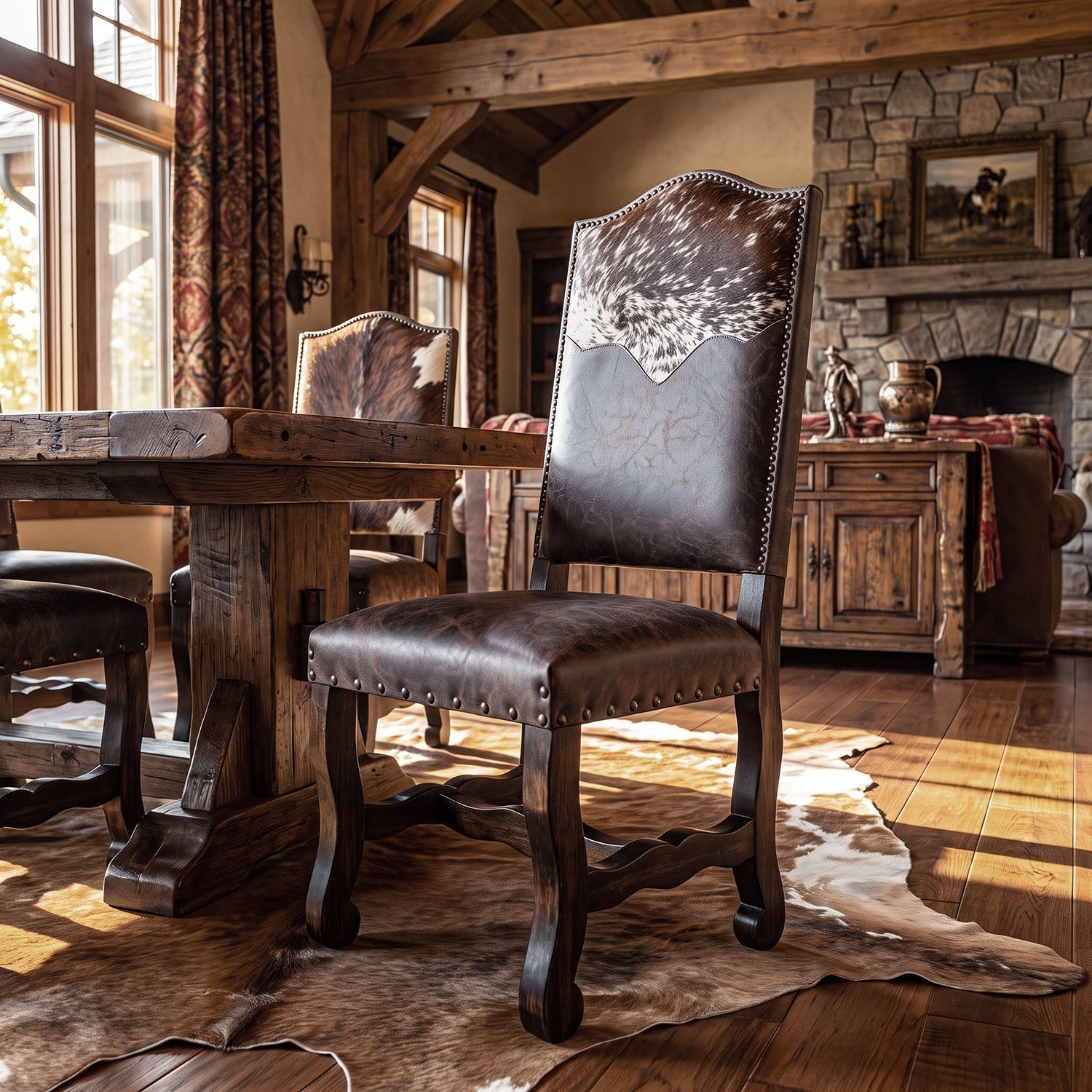
• Hair-on hide works beautifully—but use it thoughtfully (backs and accents instead of full seats if the household is rough).
Watch for:
• Blue/grey shadowing from denim on light leathers. Early is easier to address.
• Sticky residues from spilled mixers or dressings; don’t leave them sitting.
Avoid:
• Kitchen degreasers, multi-surface sprays, disinfectant wipes, alcohol-based cleaners. They can strip finishes, dry the leather, and leave cloudy patches.
3. The Quiet Room – Study, Library, Sitting Room
This is where you can be a little more indulgent:
• Full-grain aniline
• Pull-up leathers with dramatic character
• Nubuck accents
These rooms see more reading and sipping, less wrestling.
Care focus:
• Dust and vacuum lightly; don’t wait until you see a problem.
• Keep drinks on coasters or side tables, not the arm of the chair.
• Condition periodically with a high-quality, leather-appropriate conditioner, especially for aniline and pull-up.
This is also a great space for a custom western chair or a small sofa in a special leather.
A Seasonal Western Leather Care Calendar
Care is easier if you tie it to rhythms you already have.
Every Week (or So)
• Vacuum leather surfaces lightly with a soft brush attachment.
• Dust with a dry, soft cloth—particularly arms, tops of backs, and anywhere hands rest.
• Blot, don’t scrub, any fresh spills.
Every Season (4x a Year)
Pick one weekend per season and:
1. Inspect:
• Look for drying, hairline cracking, or fade lines.
• Check high-contact zones: arms, front edges of seats, bar stool tops.
2. Gently clean:
• Use a leather-specific cleaner appropriate to your leather type, applied to a cloth (not directly to the furniture).
• Work in small sections and wipe away residue.
3. Condition, if needed:
• For aniline and semi-aniline, consider a professional-grade conditioner (not oils from the pantry).
• For pigmented leathers, condition less often—too much can gum up the finish. Focus on dryness, not the calendar.
Every Few Years
Step back and look at the “story” your leather is telling. Some patina is good. When it starts to look stressed rather than beautiful, that’s your sign to:
• Adjust the room (UV, placement).
• Call a professional restorer for deeper cleaning or refinishing.
If you’re pairing this with a new piece, read our guides to white-glove delivery for western furniture and Our Western Hospitality Standard so your leather is protected from day one.
Real Western Problems & What to Do About Them
Let’s talk about the stuff that actually happens—not just theoretical spills.
Denim Dye on Light Leather Bar Stools
Normal:
Slight shadowing over time where jeans meet the seat/back.
Worrisome:
Heavy blue/grey patches that keep building up.
What to do:
• Catch it early with regular gentle cleaning using a leather-safe cleaner approved for your finish.
• Don’t attack it with magic erasers, alcohol, or bleach—it’s better to have a faint shadow than a stripped patch.
If you’re consistently seeing heavy transfer, it might be time to:
• Move light leather to backs and use a slightly darker or more pigmented leather on seats.
• Or accept that this is a “patina cost” of the look and treat it seasonally.
Dog Nail Marks on Semi-Aniline Sofas
Normal:
Light surface scuffs, especially on arms where dogs jump up.
What to do:
• For superficial marks, often a clean, dry hand and gentle warmth (or a slightly damp cloth) can help the leather’s natural oils relax the mark a bit.
• For deeper gouges, this has crossed into “character.” If it bothers you, that’s a conversation about pet rules or a slightly more protected leather next time.
An important truth: western leather with a little story on it often looks better than western leather nobody’s allowed to touch.
Boot Scuffs, Belt Buckles, and Hardware
High arm fronts and bar stool edges will catch:
• Buckles
• Zippers
• Spur edges
• Jewelry
Care:
• Use your seasonal clean-and-check to look for concentrated wear in those zones.
• If you see finish damage rather than just surface rub, text a photo to (817) 888-4890 and ask, “Is this normal or do I need help?”
Hair-On Hide Flattening or Shedding
Normal:
• Some initial shedding when new (especially on cut edges).
• Hair laying in the direction of use, not straight upright like a showroom sample.
Care:
• Vacuum with a soft brush with the grain, not against it.
• Use a soft brush to restore lay and lift debris.
• Keep hides away from razor-sharp edges or constant picking (kids’ fingers, pet claws).
Not normal:
Bald patches developing quickly in low-friction zones. That’s worth a photo and a conversation.
Pull-Up Leather That Looks “Too Marked”
Pull-up leather is meant to show:
• Color shifts
• Creases
• Compression lines
If one area looks heavily stressed:
• Work warm, clean hands over the area in circular motions; often the oils and waxes will soften the contrast.
• If it still bothers you, think in terms of layout: maybe that’s the spot for a throw or cushion rather than trying to erase the story altogether.
Internet Leather Myths (And What to Do Instead)
A few things we see online that… let’s just say we’d never do to a sofa.
Myth 1: “Olive oil (or any kitchen oil) is a great conditioner.”
Reality:
Oils from your pantry can:
• Darken leather unpredictably
• Go rancid over time
• Attract dust and become sticky
Use professional leather-care products designed for upholstery leather, not salad ingredients.
Myth 2: “Baby wipes are gentle enough for leather.”
Reality:
Most wipes:
• Are more alkaline than leather likes
• Contain additives not designed for finishes
• Can slowly strip or cloud the topcoat
If you need a quick clean, use:
• A slightly damp, soft cloth
• Or a true leather-safe cleaner as directed.
Myth 3: “If it’s scratched, just rub it hard until it disappears.”
Reality:
• On pull-up leather, a little warmth and gentle movement can help.
• On other finishes, aggressive rubbing can make a small mark into a big shiny patch.
When in doubt, stop. Take a photo in good light and text it to our team for advice.
Myth 4: “Darker leather needs less care.”
Reality:
Darker colors hide marks better. They do not protect against:
• Drying
• Cracking
• UV damage
Care is about what’s happening in the leather, not whether you can see it from ten feet away.
When to Call or Text Instead of Guessing
You’re surrounded by advice online. Some of it is fine. Some of it is filtered through people who never see western leather in the wild.
If you’re ever in doubt, that’s why this line exists at the top of our site:
Have questions about leather, textile options, or styling? Call or text us anytime at (817) 888-4890. Yes — anytime. Real people. Real guidance. No call centers.
Here’s the rule of thumb:
Small, fresh spill?
Blot gently, then do a light clean with the right kind of cleaner.
Weird mark you’ve never seen before?
Take a photo and text it to us.
You’re considering a new piece and want to avoid round two of the same problem?
Use our Free Design Consultation or Custom Western Furniture inquiry and say, “Here’s how we actually live; what would you spec?”
That’s how leather stops being something you’re afraid of “ruining” and becomes what it was always meant to be: a material that lives with you and tells the story well.
Western leather shouldn’t make you tiptoe.
With the right piece, in the right room, with a few simple habits, you get leather that feels better, looks better, and fits your life more every year it’s in your home.


Share:
Custom, Simplified: How to Order Western Furniture Without the Overwhelm
The Western Texture Code: Leather, Hide, Fabric, and the Art of a Balanced Room