


Why Leather Choice Matters More in Western Furniture
When you’re shopping for western furniture, “leather” isn’t just a color on a dropdown.
You’re choosing:
- How that sofa will age under Texas sun.
- Whether your recliner forgives belt buckles and spurs.
- If your bar stools can handle kids, dogs, and one more round.
- How your custom western furniture will read ten years from now—polished, patinaed, or tired.
Most product pages will tell you “genuine leather” and move on. That phrase is almost meaningless.
If you want to invest once and enjoy it for years, you need more than buzzwords. You need to understand:
- How a hide is cut
- How it’s finished
- How that affects feel, durability, and maintenance
This guide will walk you through the major types of leather used in western sofas, recliners, bar stools, dining chairs, and beds—what they really are, what they’re good at, and where they’re likely to disappoint.
We’ll keep it plainspoken, Western, and honest—so you can read the next product page like an insider instead of a target.
The Big Picture: Three Questions to Ask About Any Leather
Before we get into terminology, anchor yourself with three simple questions:
-
1. How do I want this leather to feel?
Smooth? Velvety? Firm? Soft and “melt-in”? Slightly rustic with grain and character? -
2. How do I want this leather to age?
Stay almost identical for years? Develop patina, scuffs, and color shifts? Hide wear or celebrate it? -
3. What reality is this piece walking into?
Kids, dogs, ranch dust, and daily jeans? Or a quieter room where you rarely eat on the sofa?
Every leather type is a trade-off between:
- Beauty
- Durability
- Maintenance
- Forgiveness
Your job is not to find a “perfect” leather. Your job is to find the leather that tells the truth about your lifestyle and still looks fantastic.
Leather Basics: How a Hide Is Cut (Grain, Split, and Junk)
A raw hide has layers—like a cake nobody ordered but everyone is forced to eat.
From top to bottom:
- Grain layer: The top surface, where the animal’s hair grew. Tightest fibers, most strength, most natural markings.
- Corium layer: Looser fibers beneath the grain—still useful, but not as strong or fine.
- Splits: Lower layers cut away from the grain, used for cheaper leather or suede.
- Scrap/fibers: Whatever’s left over, often ground up and reconstituted into “bonded leather.”
Almost every leather term is about which part of the hide you’re getting, how it’s been sanded or corrected, and what finish has been applied on top.
Grain Types: Full-Grain, Top-Grain, Corrected, Split, and Bonded
Full-Grain Leather: The Real Deal
What it is:
The entire grain layer, left intact. The surface may be lightly buffed but not sanded down to remove natural markings.
How it looks and feels:
- Natural grain, variation, and character
- May show healed scars, neck wrinkles, fat lines
- Starts firmer, softens and molds with use
- Builds rich patina over time
Why it’s great for western furniture:
- Maximum strength and durability
- Ages like a well-used saddle—better with time
- Perfect for western leather sofas, recliners, and chairs in homes that appreciate character
When it may not be ideal:
- If you want a flawless, uniform, “hotel lobby” look
- If you’re allergic to the idea of visible markings and patina
Top-Grain Leather: The Polished Workhorse
What it is:
The upper portion of the hide, but often slightly sanded or corrected to even out the surface. Still uses the grain layer but with more finishing.
How it looks and feels:
- Smoother, more consistent than full-grain
- Fewer visible scars and marks
- Often paired with protective finishes (semi-aniline or pigmented)
Why it’s great for western furniture:
- Excellent balance of beauty and practicality
- Easier to clean, more forgiving for families and rentals
- Ideal for family-room sectionals, recliners, and bar stools that see real life daily
When it may not be ideal:
- If you want maximum patina and the most “raw” leather look
- If you want to see every natural mark and variation
Corrected-Grain Leather: The Makeup Artist
How it looks and feels:
Top-grain leather that’s heavily sanded or buffed to remove imperfections, then embossed with an artificial grain pattern.
What it is:
- Very consistent surface, fixed grain pattern
- Typically finished with pigmented color and protective topcoat
- Often feels a bit more “finished” or coated
Why it’s sometimes used:
- Hides with more flaws can be salvaged
- Highly consistent look for large projects
- Good stain and abrasion resistance
Where it fits in your world:
- High-traffic commercial spaces, rentals, or “I need this to take a beating and still look tidy” situations
- Fine for some western bar stools and dining chairs that are all about practicality
When it may not be ideal:
- If you’re looking for high-end, natural-feeling leathers for your main western sofa or statement chair
- If you dislike the slightly “coated” hand
Split Leather: The Underside
What it is:
The lower layer of the hide after the grain is split off. Often used for suede or cheap “genuine leather” applications.
Pros:
- Can be made into suede (soft, velvety)
- Lower cost
Cons for furniture:
- Much weaker than grain leather
- More prone to stretching and tearing
- Often heavily coated or laminated to fake grain
Where it belongs (and doesn’t):
- Fine as backing or low-stress areas in some pieces
- Not what you want for the main seating surfaces on heirloom western furniture
Bonded Leather: Don’t.
What it is:
Scraps and fibers of leather ground up, mixed with adhesives, and pressed onto a fabric or paper backing. Often heavily coated and patterned.
Why it’s cheap:
Because it’s basically the hot dog of leather.
Reality check:
- Can crack, peel, and flake with time
- Does not age like real leather
- Often marketed with “leather” in the name but not the same thing
Bottom line:
If you’re shopping western furniture that’s meant to last, bonded leather is almost never worth it. You’re paying for disappointment on a delay.
Finish Types: Aniline, Semi-Aniline, Pigmented, and Pull-Up
Grain is the “what.” Finish is the “how it’s dressed.”
Aniline Leather: The Purist
What it is:
Leather dyed with transparent dyes and minimal surface coating. The grain is fully visible.
Look & feel:
- Soft, luxurious, very natural
- Shows all markings and color variation
- Develops deep, dramatic patina
Pros:
- Most authentic look and feel
- Very comfortable, “buttery” hand
- Ages beautifully in the right home
Cons:
- Less stain-resistant
- More sensitive to spills, oils, and UV
- Best for lower-traffic, more controlled environments
Best for:
A formal sitting room, a master bedroom western chair, or a sofa in a home where people respect the furniture.
Semi-Aniline Leather: The Sweet Spot
What it is:
Aniline-dyed leather with a light protective topcoat. Combines natural look with a bit more practicality.
Look & feel:
- Still shows grain and variation
- Slightly more even color than pure aniline
- Softer hand than heavily pigmented leather
Pros:
- Better stain and fade resistance than full aniline
- Still rich, natural, and high-end
- Great balance of beauty and everyday usability
Best for:
- Western leather sofas in real family rooms
- Recliners that see nightly use
- Custom western furniture where you want longevity and grace
Pigmented/Protected Leather: The Armor
What it is:
Leather with an opaque pigmented coating and stronger protective finish applied on top.
Look & feel:
- More uniform color and grain
- Slightly cooler, smoother feel
- More “finished” appearance, less raw character
Pros:
- Most stain-resistant and durable surface
- Very forgiving for kids, pets, rentals, and commercial use
- Easy to wipe clean
Cons:
- Less natural variation and patina
- Can feel a bit less “alive” than aniline or semi-aniline
Best for:
- Bar stools in high-use kitchens and bar areas
- Cabin rentals and bunkhouses
- Game rooms, media rooms, and households with wild children and dogs
Pull-Up Leather: The Drama King (In a Good Way)
What it is:
A type of aniline or semi-aniline leather infused with oils and waxes. When stretched or creased, the color lightens—creating a “pull-up” effect.
Look & feel:
- Rich, rustic, and dramatic
- Shows movement, creases, and wear quickly
- Very Western in spirit—lived-in from day one
Pros:
- Gorgeous character and depth
- Patina lovers’ dream
- Great match for distressed woods and iron
Cons:
- Shows scratches and scuffs easily
- Not for the “I want it to look perfect forever” crowd
- Needs occasional care to keep from drying
Best for:
- Statement western chairs, ottomans, and sofas in homes that love patina
- Lodge and ranch spaces where a bit of wear is part of the charm
Special Cases: Nubuck, Suede, Hair-On Hide, and Embossed Leathers
Nubuck: Velvet from the Top
What it is:
Top-grain leather lightly sanded on the surface to create a velvety nap.
Pros:
- Luxurious touch
- Refined, soft look
Cons:
- Stains and marks easily
- Not ideal for messy households
Cons:
Accent western chairs in lower-traffic rooms, headboards, and decorative details.
Suede: Velvet from the Underside
What it is:
Split leather buffed on the flesh side. Deeper nap than nubuck.
Pros:
- Very soft
- Distinctive texture
Cons:
- More fragile, more absorbent
- Not great for primary seating in busy homes
Best for:
Pillows, accents, and select panels—not full seating surfaces on major pieces.
Hair-On Hide: The Western Icon
What it is:
Leather left with hair intact—cowhide, axis, and other hides used as panels or inlays.
Pros:
- Instant Western character
- Each hide is unique
- Works beautifully on bar stools, accent chairs, headboards, ottomans
Cons:
- Hair patterns vary—no two are identical
- Needs mindful care (no constant scratching or rough brushing)
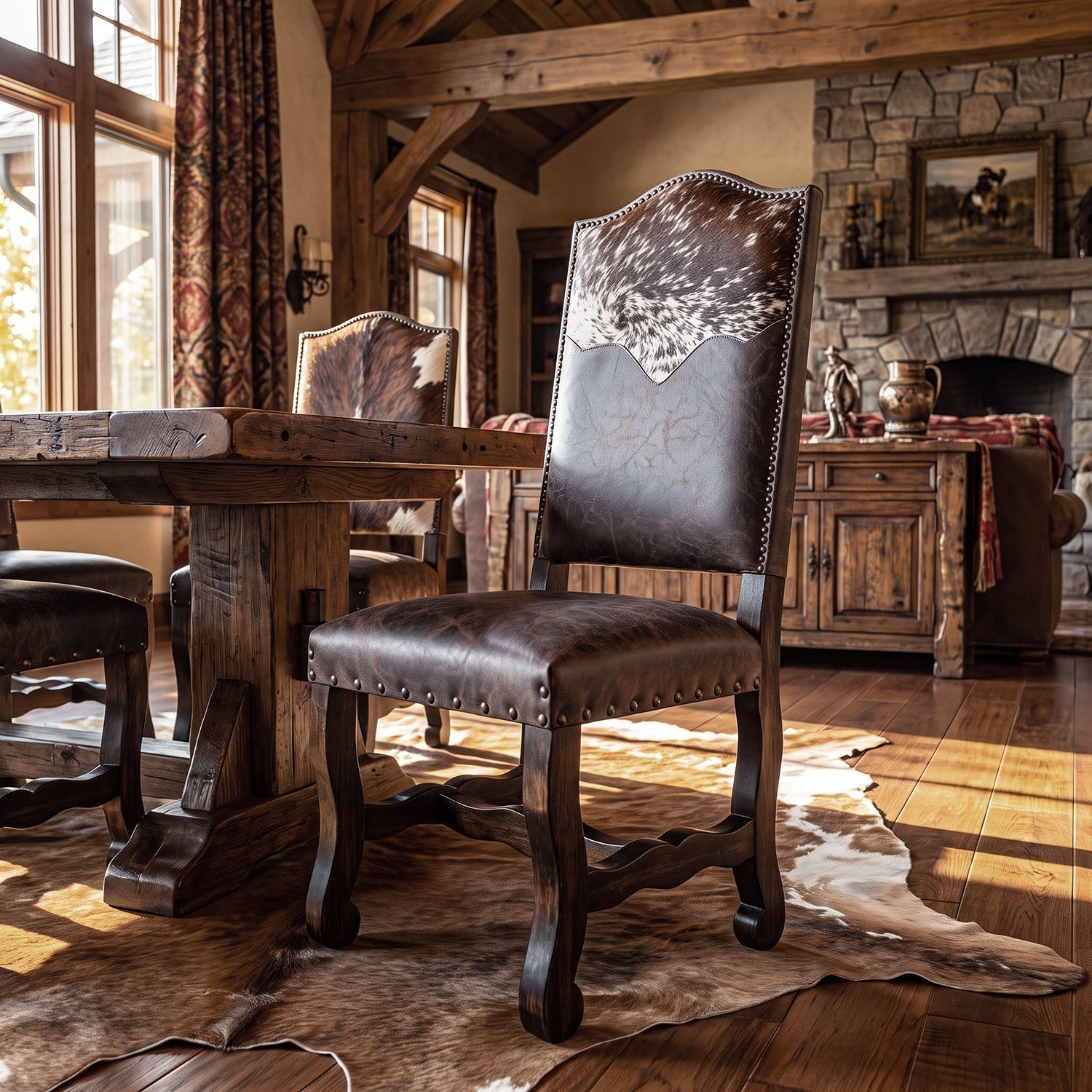
Hair-on hide pairs beautifully with smooth leathers on the frame and seat—giving you both durability and drama.
Embossed and “Tooled” Leathers
What they are:
Leathers stamped or embossed with patterns—florals, basketweave, exotic prints like “croc” or “gator.”
Pros:
- High visual impact
- Great for small areas—panels, insets, and trim
Cons:
- Can be visually overwhelming if overused
- Texture can collect dust and crumbs if used on broad seat areas
Best for:
Inlays on western bar stools, gables on sofas, panels on headboards, and accent chairs where you want a bit of impact without a full pattern takeover.
Matching Leather to Real Life: Scenarios and Suggestions
Let’s get practical. Here’s where the “truth” comes in.
Scenario 1: Kids, Dogs, Daily Use – The Family Ranch Room
Reality:
- Boots, belt buckles, and dog nails
- Snacks on the sofa
- Sun through big windows
Good choices:
- Semi-aniline or pigmented top-grain for main seating surfaces
- Hair-on hide accents on backs or out-of-the-way panels
- Darker to mid-tone colors that hide small marks
Avoid:
- Pure aniline on the most-used sofa if you’re not disciplined about care
- Nubuck and suede on primary seating
Looking for pieces that fit this lifestyle? Explore our Western Leather Recliners and Western Sofas collections.
Scenario 2: Low-Traffic, High-Impact Room – The Quiet Lounge
Reality:
- You don’t live in here; you host, read, and unwind
- Fewer spills, more ritual
Good choices:
- Full-grain aniline or semi-aniline in rich tones
- Pull-up leathers if you love patina and drama
- Nubuck as an accent on chairs or a bench
Avoid:
- Overly plastic-feeling pigmented leathers—wastes the potential of the room
This is where our more dramatic western accent chairs and statement sofas really shine.
Scenario 3: Rental/Second Home – Mountain or Ranch Getaway
Reality:
- Guests don’t baby furniture
- You’re not there to micromanage
- Cleaning crews with a schedule
Good choices:
- Top-grain pigmented or semi-aniline with strong protective topcoat
- Moderately distressed looks that hide wear
- Easy-wipe surfaces on bar stools and dining chairs
Avoid:
- High-maintenance aniline in main living areas
- Pale nubuck or suede where guests sit with drinks
Outfitting a lodge or rental? Our Custom Western Furniture and Free Design Consultation can help you spec leathers that look luxurious and clean up easily.
Scenario 4: High-Sun Rooms – Big Windows, Big Views
Reality:
- UV light is not gentle on any material
- Fading and drying are real risks
Good choices:
- Semi-aniline and pigmented leathers with more robust finish
- Medium to darker tones that fade more gracefully
- Strategic use of hair-on hide away from direct glass
Avoid:
- The most delicate pure aniline leathers right in front of south- or west-facing windows, unless you’re ready to rotate, shade, and care for them actively.
Leather Care: A Few Myths to Retire
-
1. “Leather doesn’t need maintenance.”
Not true. It needs gentle cleaning and occasional conditioning depending on the finish. -
2. “Darker leather is always tougher.”
Color alone doesn’t equal durability; finish and grain matter more. -
3. “If it says ‘genuine leather,’ it must be high-end.”
“Genuine leather” can mean almost anything—including heavily corrected and low-grade leathers. -
4. “All scratches are bad.”
On pull-up and some aniline leathers, light scratches and shifts are part of the charm. Many can be reduced with warmth and a bit of care.
For more on how we care for pieces before they reach you—and how delivery plays into protecting your investment—see Our Western Hospitality Standard and our Customer Service & Delivery FAQ.
How We Think About Leather When We Specify Western Furniture
When we spec leathers for our western sofas, recliners, bar stools, and custom builds, we’re not just thinking about what looks good in a studio shot.
We’re thinking about:
- The weight and presence of the frame
- How close the piece will sit to real life (entryway, fireplace, TV, kids’ orbit)
- The kind of aging that will make you love the piece more, not less
- How delivery, placement, and your environment will treat the leather over time
That’s why we talk about leather choice in the same breath as:
- Lead times (some hides are special-order)
- White-glove delivery (protecting your investment on day one)
- Our Customer Service Promise (setting expectations for care and communication)
If you’re unsure which leather is right for your home, you don’t have to guess. You can schedule a Free Design Consultation, review Our Western Hospitality Standard, or dive into our guide on lead times and white-glove delivery to see how we handle the entire journey.
Closing: Pick the Leather That Knows Your Life
At the end of the day, picking leather for western furniture isn’t about memorizing jargon. It’s about telling the truth about how you live—and choosing the leather that can live that truth with you.
If you want drama and patina, pick something that will show it.
If you want armor, pick a finish that’s built like one.
If you want both beauty and forgiveness, lean into the middle ground: quality top-grain and semi-aniline.
The right leather won’t make you nervous. It will make you proud to use the furniture the way it was meant to be used.
If you’re ready for western furniture that comes with real people, clear guidance, and a delivery experience that respects your home, we’re here—boots on the ground, phones on, ready to walk you through it.
Share:
Western Hospitality: The Customer Service Behind Real Western Furniture
Custom, Simplified: How to Order Western Furniture Without the Overwhelm