


Most rooms don’t need a remodel.
They need one decision—the kind that brings the room into focus the moment you make it.
You know what I mean: a space can be clean, furnished, “nice”… and still feel unfinished. Like it never quite settles. Like it needs something, but you can’t name what.
That “something” is usually not a throw pillow. It’s not a candle. It’s not one more small purchase.
It’s an anchor.
A single piece with enough presence—enough proportion and material truth—that the room finally has a center of gravity. That’s the One Upgrade Rule:
Upgrade one strategic piece, and the whole room changes—even if you don’t touch anything else.
Western interiors are especially sensitive to this, because Western is built on real materials. Leather, hide, reclaimed woods, iron, stone, hammered metal—these don’t behave like generic décor. They carry weight. They carry story. Done well, they feel refined and collected. Done without a plan, they can feel busy or flat.
So this guide does one thing: it helps you pick the single upgrade that will change your room the most—based on how you actually live.
No fluff. No filler. No “add a basket.” Just the upgrade that moves the needle.
Why One Upgrade Works Better Than Ten Small Ones
Most homes are built from mid-level decisions that are “safe.” Nothing wrong. Nothing unforgettable.
• A sofa that’s fine, but doesn’t anchor.
• A rug that technically fits, but doesn’t unify anything.
• A coffee table that fills the middle, but doesn’t create gravity.
• Lighting that exists, but doesn’t shape mood.
• Décor that fills surfaces, but doesn’t create direction.
So the room has no lead actor. No centerpiece decision. No spine.
Quiet luxury isn’t about buying more. Quiet luxury is about choosing one strong piece and letting everything else behave in relation to it.
• busy and themed, or
• expensive but flat, or
• full of nice items that still don’t look like a finished home
When the right piece takes the lead:
1. The room finally has a “center.”
2. Your existing pieces stop looking wrong.
3. You stop chasing the room with little purchases.
That’s the goal: fewer decisions, better outcomes.
Step One: Decide the Room’s Job
Before you choose the upgrade, decide the room’s job. Western homes aren’t showrooms; they’re lived in.
Ask yourself:
• Is this a great room where people sprawl and relax?
• Is it a conversation room where guests gather and talk?
• Is it a dining room built for hosting?
• Is the bedroom meant to feel calm, finished, and grounded?
• Does the entry need to feel elevated the second you walk in?
Your upgrade should solve the job. Otherwise you end up with a gorgeous piece that still doesn’t fix the room.
And if your space feels awkward to move through—if people “shuffle,” bump knees, or constantly walk through the seating area—start by fixing flow before you buy anything. This guide is the cleanest way to see what’s happening in a room and why it feels off: Traffic Flow Tips for Great Rooms and Open Spaces
The One Upgrade Menu
Here are the six upgrades that change a Western room the fastest. Not because they’re trendy—because they control structure, mood, and cohesion.
You don’t need all six. You need the right one.
Upgrade #1: The Sofa (or Sectional) That Anchors the Whole House
If a living room feels unfinished, the seating is usually the culprit. Not comfort-wise—presence-wise.
A true anchor sofa does three things:
• It sets the scale of the entire room.
• It sets the material direction (leather-forward, fabric-forward, hide accents or not).
• It sets the mood (refined Western, lodge warmth, modern ranch).
This is the right one-upgrade if:
• your current sofa feels too small for the room
• you keep rearranging and nothing feels right
• you keep buying “finishing touches,” but the room never feels finished
• the room looks okay in photos but feels unsettled in real life
What to choose (quiet luxury Western version):
• a substantial silhouette that can hold the room
• leather with depth (grain, tonal variation, natural character) or fabric with real texture
• details used with restraint: stitching and nailheads as accents, not noise
One quick truth: the wrong leather can make a beautiful sofa feel stressful. If you want a simple reference that explains how leather, hide, wood, and metal are meant to live and age in a real home, keep this page handy: Materials & Care: How Our Western Pieces Live in Your Home
And if you’ve ever loved a piece but wished it came in a different leather, size, or finish—custom can be the cleanest path to getting it right without guesswork. This is the simplest way to start: The Custom Shortcut
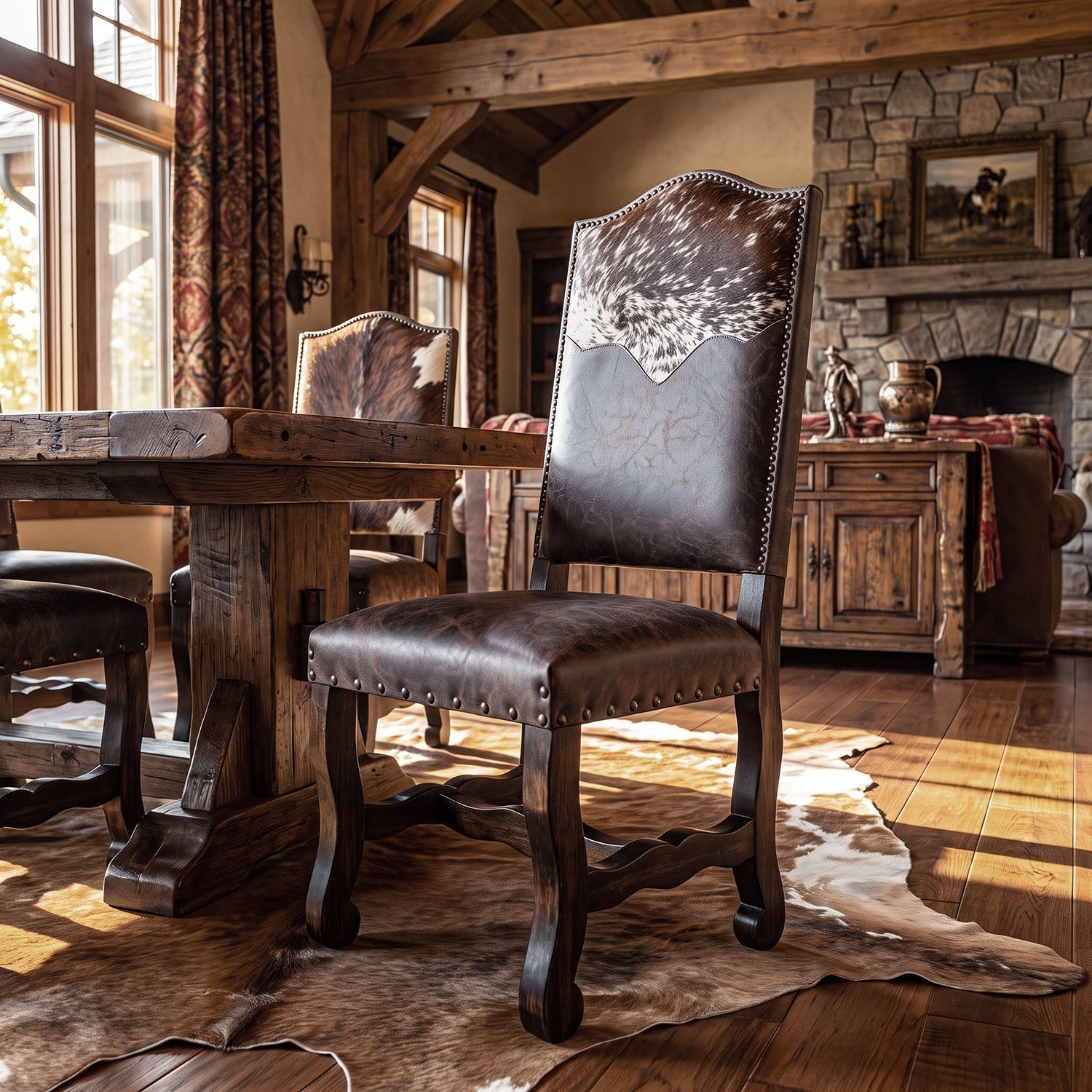
Upgrade #2: The Dining Table That Changes the Tone of the Entire Home
A dining table is one of the few pieces that can upgrade the whole house—because it tends to be visible from multiple angles and it signals how you live.
A real table has weight. Not just physical weight—presence.
This is the right one-upgrade if:
• you host, even casually
• your dining area feels temporary or placeholder
• your chairs are fine, but the room has no center
• you want your home to feel more established and less assembled
What to look for:
• wood with depth (hand-finished, reclaimed, carved, or beautifully sealed)
• a base that looks intentional (trestle, pedestal, carved legs)
• scale that respects movement around the table
If a dining room ever feels “tight,” it’s usually because the table decision didn’t respect traffic flow. This guide will save you from that regret: How to Choose the Perfect Western Dining Table: A Complete Ranch Home Guide
Upgrade #3: The Rug That Pulls the Seating Area Together
A rug isn’t décor. In a well-designed room, it’s structure.
It tells the room where the zone is. It quietly unifies seating. It makes everything feel intentional.
This is the right one-upgrade if:
• your seating feels like separate islands
• the room feels choppy or disconnected
• open concept needs definition
• the room feels “nice,” but not cohesive
Quiet luxury rug rules:
• size first (front legs of sofa and chairs on the rug at minimum)
• texture over busy pattern
• cowhide is powerful, but best used as an accent layer—not the foundation
If you want a clean method for balancing leather, hide, and fabric so the room feels collected (not costume), this guide gives you the framework: The Western Texture Code: Leather, Hide, Fabric, and the Art of a Balanced Room
Upgrade #4: The Coffee Table That Gives the Room Gravity
The coffee table is an underrated hero in Western rooms because it’s where you can introduce major material presence—reclaimed wood, iron, leather detail—without replacing your seating.
A strong coffee table creates a center of gravity. It gives the room a spine.
This is the right one-upgrade if:
• your living room lacks a center
• your current table is too small, too generic, or too light
• the room looks fine but still feels unsettled
What to look for:
• substantial footprint appropriate to your sofa
• real texture (wood grain, hammered metal, leather depth)
• a shape that supports movement (round or oval can improve flow fast)
Coffee tables can ruin comfort if spacing is wrong. The simple clearance standards in this guide will help you get it right: Western Living Room Layout: Traffic Flow Tips for Great Rooms and Open Spaces
Upgrade #5: Lighting Layers (the fastest “luxury” upgrade)
If you’ve ever thought, “This room should feel nicer than it does,” lighting is usually the missing ingredient.
Quiet luxury isn’t one chandelier. It’s layered light: warm pools, soft shadows, and a room that feels better at 8pm than it does under harsh overhead glare.
This is the right one-upgrade if:
• the room looks better in daylight than in real life
• evenings feel flat, cold, or harsh
• you rely on overhead lights for everything
The simple fix:
• two table lamps in the living space
• one floor lamp near a chair
• warm bulbs
• dimmers if possible
This upgrade makes everything you already own look more expensive. That’s why it works.
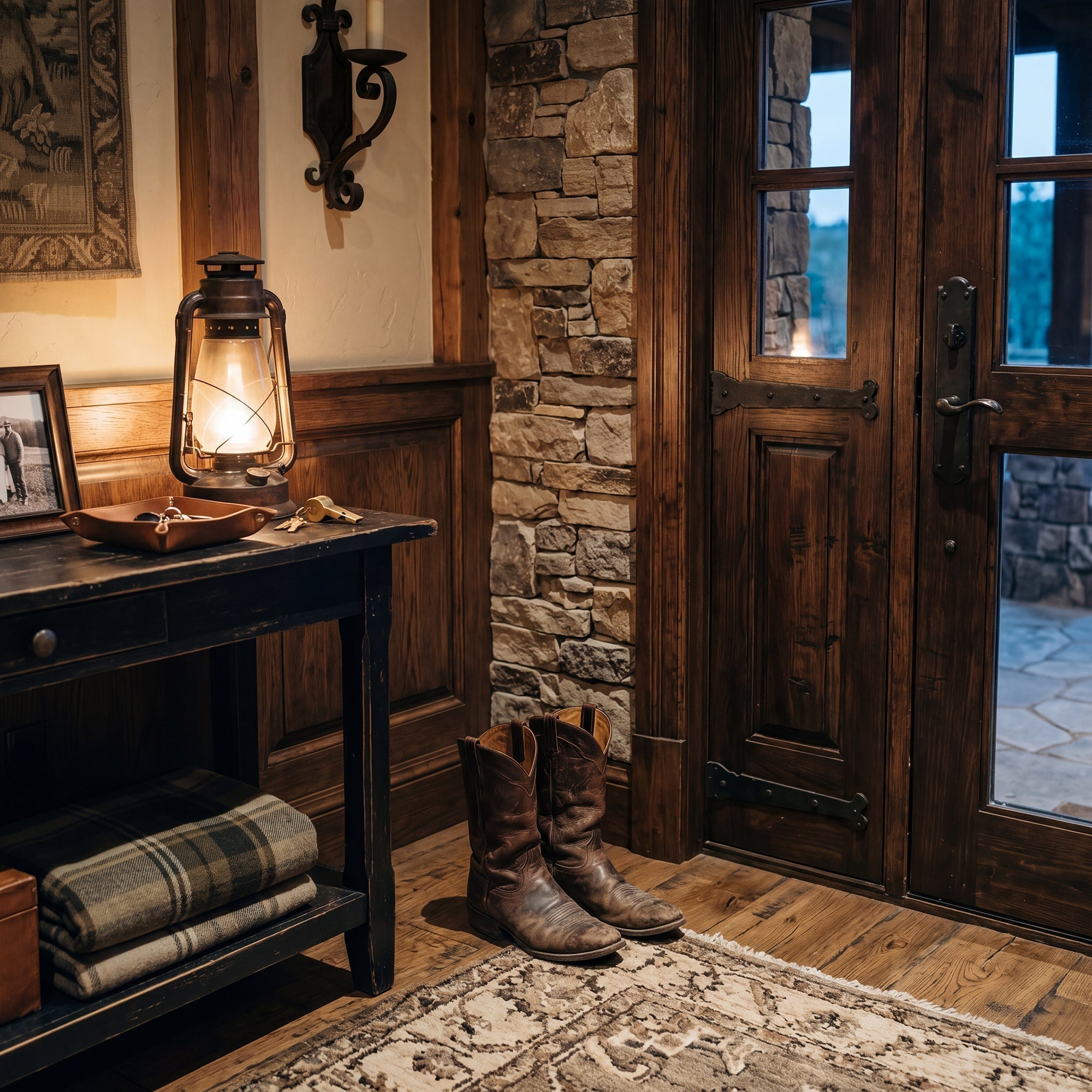
Upgrade #6: The Entry Console That Changes First Impressions
If the first ten feet of your home feels bare or chaotic, the whole place feels less finished—no matter how beautiful the rest is.
A proper entry console creates:
• an arrival ritual
• a clean drop zone
• a visual statement
• instant polish
This is the right one-upgrade if:
• the entry feels empty, cluttered, or confused
• you host and want the first impression to land
• you want the home to feel elevated immediately
The simplest formula:
• console
• lamp
• art or mirror
• one meaningful object (not a pile of everything)
The goal isn’t to decorate the entry. The goal is to make it feel calm and intentional.
The Decision Path (No Guesswork)
If you want the simplest way to pick your one upgrade, use this:
• Living room feels unfinished → upgrade the sofa/sectional
• Home feels temporary → upgrade the dining table
• Room feels disconnected → upgrade the rug
• Room lacks a center → upgrade the coffee table
• Everything feels flat at night → upgrade lighting layers
• Entry feels underwhelming → upgrade the entry console
If you’re torn between two choices, pick the one that solves the room’s job. The job always wins.
The Mistakes That Ruin the One Upgrade Rule
Mistake 1: Choosing the wrong scale
A “nice” upgrade that’s too small won’t change the room. Presence matters. Quiet luxury doesn’t whisper because it’s timid—it whispers because it’s confident.
Mistake 2: Trying to finish a room with small things
If the room lacks an anchor, small purchases become a loop: buy something, feel better for a day, then feel unfinished again.
If you want a clean plan that stops that cycle, this buying timeline is the blueprint: Western Quiet Luxury on a Calendar: What to Buy First (and Why)
Mistake 3: Mixing five hero textures
One hero per view. Not five.
If your room ever starts feeling “loud,” go back to the texture rules here: The Western Texture Code: Leather, Hide, Fabric, and the Art of a Balanced Room
Mistake 4: Ignoring real-life movement
A room can be beautiful and still feel slightly stressful if traffic flow is wrong. That’s why layout standards matter: Western Living Room Layout: Traffic Flow Tips for Great Rooms and Open Spaces
The Custom Advantage (Where This Gets Fun)
Most stores sell “what’s on the floor.”
The best homes are built differently: you start with a strong piece, then tailor it so it fits your space and lifestyle—not the other way around.
Custom doesn’t have to be complicated. Most custom upgrades are one or two adjustments:
• leather tone or durability profile
• hide placement refined (impact without costume)
• dimensions adjusted so traffic flow works
• finishes matched so the room feels coherent
If you want the quickest, least-overwhelming way to start a custom request, this guide gives you the exact language to use: The Custom Shortcut: The 5 Most Popular Custom Requests (and Exactly What to Ask For)
And if you want to understand how materials behave over time—what patina looks like, what’s normal, and what care is actually worth doing—this is the reference: Western Leather, Well Lived: A Real-Life Care Guide for Sofas, Chairs, and Bar Stools
Four One Upgrade Recipes (So You Can Execute Without Turning It Into a Project)
Here are real, practical ways to apply the rule without turning your house into a multi-month saga.
Recipe A: Upgrade the Sofa
Keep your current rug and tables for now. Upgrade to a commanding sofa. Then:
• remove half the décor
• keep pillows minimal
• add one lamp
Your room will look calmer and more expensive immediately.
Recipe B: Upgrade the Dining Table
Keep your chairs if you need to. Upgrade the table. Then:
• add one simple centerpiece (not a parade float)
• consider a sideboard later
• upgrade chairs after the table sets the tone
Recipe C: Upgrade the Rug
Keep your sofa and chairs. Upgrade the rug to the right size and texture. Then:
• pull furniture onto the rug
• re-center the coffee table
• add one lamp to warm the zone
Rug first. Center second.
Recipe D: Upgrade the Entry Console
Upgrade the console. Then:
• one lamp
• one art piece
• one bowl/tray
• remove clutter
Your home feels elevated immediately, and you didn’t have to move a sofa.
Closing: One Strong Piece Beats Ten Small Ones
Quiet luxury isn’t about filling a room. It’s about choosing the right anchor and letting everything else breathe.
Choose the one upgrade that matches the room’s job, and the space will finally settle.
If you want the simplest foundation for making good material choices—especially in leather, hide, wood, and metal—this guide is the best place to start: Materials & Care: How Our Western Pieces Live in Your Home
If you want help sequencing your rooms, choosing anchors, or deciding where custom will save you from expensive mistakes, reach out anytime:
Yes — anytime. Call or text us at (817) 888-4890. Real people, Real guidance, No call centers.

Share:
Western Quiet Luxury on a Calendar: What to Buy First (and Why)
The Western Home After Dark: Designing Nightfall Atmosphere (Not Just Daytime Pretty)