


There’s a moment almost everyone hits when they’re furnishing a Western home.
You buy something beautiful—maybe a carved console, a hammered-metal accent table, a set of bar stools with hide detail. It arrives. It’s exactly what you hoped it would be.
And then you place it… and the room still feels unfinished.
Not because the piece isn’t right. But because the room hasn’t been built in the right order.
Quiet luxury isn’t just the quality of what you buy. It’s the sequence—the way each purchase supports the next until the space feels inevitable, like it was always meant to be that way.
In Western interiors, this matters even more. Western furniture tends to have:
• more presence (scale and weight)
• more texture (leather, hide, iron, reclaimed woods)
• more visual personality (carving, nailheads, metalwork)
Which means “random buying” shows faster. A room can tip into:
• busy and themed, or
• expensive but flat, or
• full of nice items that still don’t look like a finished home
This article is a plan: a calendar you can follow to build a cohesive Western home without wasting money, second-guessing purchases, or piling up “almost right” pieces you’ll replace later.
We’ll also weave in the realities the internet loves to ignore:
• lead times (what they actually mean)
• delivery planning (so you aren’t living in a crate maze)
• when custom is the smart move
• and how to buy fewer things—better
The Big Idea: Anchors First, Accessories Last
Most people buy in the wrong order because it feels safer.
It’s easy to commit to:
• a lamp
• décor
• a small accent table
• a rug you “might” use later
Those purchases feel reversible.
But the pieces that truly define a home—the anchors—feel like a bigger decision:
• sofa or sectional
• dining table
• bed
• large casegoods (buffet, sideboard, major console)
So people avoid anchors at first and buy around the room. The space fills with “nice” but never becomes cohesive. Then the anchor arrives later and exposes the problem: half the smaller purchases don’t fit the scale, finish, or style of the new foundation.
Quiet luxury does the opposite:
• 1. Anchor pieces first (the bones)
• 2. Structure pieces second (the architecture)
• 3. Soft layers third (warmth + cohesion)
• 4. Accessories last (personality + polish)
That order makes your home feel curated, even if it takes months.
And if it does take months? That’s not a problem. That’s how great homes are built—intentionally, not impulsively.
Start Here: The Three Questions That Decide Your Calendar
Before you buy anything, answer these three questions. They will save you from buying the wrong “first piece.”
1) What rooms do you actually live in?
For most homes, it’s:
• living room / great room
• kitchen + dining
• bedroom
Everything else becomes easier once those three work.
If you start by “decorating the hallway” but your great room still has no anchor, the home will feel unfinished no matter how many beautiful accessories you add.
2) What’s the heart of your home?
This is the space where people gather naturally. The room that holds your evenings and your weekends.
That’s where you start—because when the heart is right, the rest of the house starts to harmonize.
3) Are you planning around a date?
If you have a deadline—holiday hosting, a move, a big ranch gathering—your calendar changes because lead times and delivery planning matter.
If you’re planning around a date, read this as a “phase plan” and start ordering anchors earlier than you think.
The Western Quiet Luxury Calendar
Think of this as a proven sequence you can follow. You can compress it into a few weeks or stretch it across a year. The power isn’t the pace—the power is the order.
Phase 1 (Week 1): Measure, Map, and Choose Your Anchors
This phase is not glamorous. It is also the phase that prevents expensive regret.
Step 1: Measure like a person who wants to live well
Measure:
• room dimensions
• doorways and hallways
• stairwells and turns
• ceiling height where tall pieces are involved
• the “routes” people walk most often (entry → seating, seating → kitchen, seating → outdoors)
Most “bad room” problems aren’t taste problems. They’re traffic-flow problems.
Step 2: Choose your anchor categories
Every room has a small set of anchors that do most of the heavy lifting.
• Living room / great room anchors: sofa/sectional + coffee table (and usually one real chair)
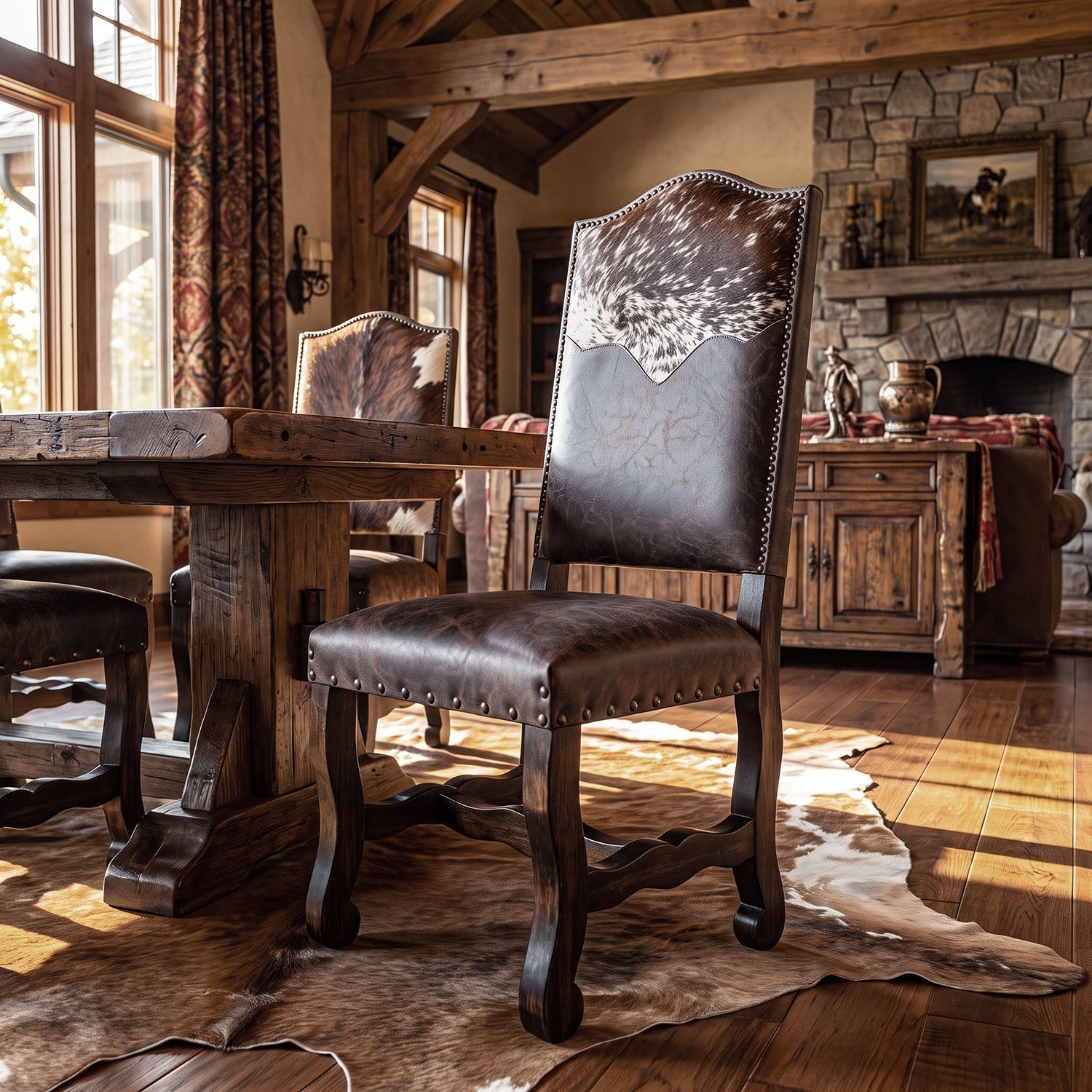
• Dining anchors: dining table + chairs
• Bedroom anchors: bed + nightstands
Everything else is support.
Step 3: Decide early: ready-to-order vs custom-crafted
Custom isn’t complicated when you approach it correctly. It’s often the simplest way to make a room feel intentional—especially in Western homes where scale, finishes, and materials matter.
Custom is most valuable for:
• sizing to fit traffic flow
• dialing in leather tone and finish
• refining hide placement
• matching finishes across rooms
• special functional needs (beds and bases, seating depth, etc.)
If you wait too long to decide, you’ll buy around problems custom could have solved cleanly.
Phase 2 (Weeks 2–4): Secure the Big Anchors First
This is the phase where you stop “shopping” and start building.
Anchors define:
• scale
• material direction (leather vs fabric, reclaimed vs refined wood)
• the mood of the home
• the finishes everything else should harmonize with)
This is also where lead times matter most. If you’re building a home that feels refined and lasting, you may be choosing pieces that are made to order, or require coordinated delivery. That’s normal. The goal is to plan around it—not panic later.
Living Room / Great Room: The Big Three
If you want the room to feel finished without buying ten things, these three pieces do the work:
1. Sofa or sectional (the anchor of anchors)
2. Coffee table (the center of gravity)
3. One high-comfort chair (accent chair, swivel chair, or recliner)
Why this works:
• Seating sets the scale. Everything else follows the seating.
• The coffee table sets the “center.” Without it, the room feels unsettled.
• The chair creates flexibility and a feeling of hospitality—there’s always a place for one more person.
Dining: Table First, Always
Dining rooms are where people waste money fastest, because they buy chairs before they buy the table—or buy a table without thinking about walkways.
Buy in this order:
1. Dining table
2. Chairs (or chairs + bench)
Because:
• Table size determines chair count
• Table scale determines chair style
• Table placement determines walkway and clearance
Bedroom: Bed and Nightstands as a Pair
A bed alone doesn’t finish a room. A bed with nightstands does.
Buy:
1. Bed
2. Nightstands (at the same time, if possible)
This avoids the common problem: a strong bed anchored in the room with two random placeholders beside it.
Phase 3 (Month 2): Add Structure Pieces That Make the Home Feel Designed
Once anchors are chosen (or ordered), you add the “architecture” of a room: pieces that create function, surfaces, and visual balance.
These are the pieces that make a room feel composed:
• console behind a sofa
• sideboard / buffet in a dining space
• entry console that creates the first impression
• accent tables that give every seat a landing spot
• ottoman/bench that adds comfort and polish
This phase is where many rooms go from “new furniture placed in a room” to “this feels like a home.”
Why structure pieces matter so much
Quiet luxury is often just this:
• every seat has a surface nearby
• lighting has a proper home
• storage feels intentional (not piles)
• walkways stay clear
• nothing feels like it was shoved into a corner
Phase 4 (Month 3): Rugs, Lighting, and the Texture Plan
This is where a home stops feeling “freshly furnished” and starts feeling warm, grounded, and lived-in—in the best way.
Rugs are not décor. Rugs are structure.
A rug anchors:
• the seating group
• the dining zone
• the bedroom feel
But rugs are also where people make expensive mistakes.
The rule:
Don’t buy the rug until you know your anchors.
Because rug size is dictated by:
• sofa length
• chair placement
• coffee table footprint
• traffic paths
This is why rug purchases made “early” often become wrong later.
Lighting is quiet luxury’s secret weapon
If your furniture is good but the room still feels cold, it’s usually lighting.
Quiet luxury rooms rely on:
• table lamps (yes, plural)
• floor lamps near seating
• warm bulbs
• dimmers
Overhead lighting alone is the fastest way to make a room feel like a showroom.
Texture plan: give the room a rhythm
• One hero texture per view
• Repeat key materials 2–3 times
• Give the eye a resting place
This prevents “theme-room syndrome” and makes the home feel collected.
Phase 5 (Month 4+): Accessories Last, On Purpose
This is where most people start. It’s also where you should finish.
Accessories are powerful when they’re placed into a room that already has:
• anchors
• structure
• lighting
• a cohesive material story
Accessories placed too early become clutter. Accessories placed late become polish.
Quiet luxury accessories are:
• fewer
• heavier (visually and materially)
• meaningful
• placed with restraint
This is where your most distinctive Western décor shines—because it isn’t trying to compensate for a room that’s missing its foundation.
The “Stop Wasting Money” Rules
These are the rules that keep you from buying the same room twice.
Rule 1: Don’t buy rugs until seating/table size is decided
Rugs are expensive. Buying the wrong rug first is the easiest way to waste money.
Rule 2: Don’t buy dining chairs before the table
Chairs are more emotional. Tables are more structural. Let structure lead.
Rule 3: Don’t over-buy décor to finish an unfinished room
Décor can’t anchor a room. It can only decorate what’s already anchored.
Rule 4: Choose your hero material early
Pick the dominant material direction:
• leather-forward vs fabric-forward
• hide accents vs hide-heavy
• reclaimed/character wood vs refined/clean wood
• iron/copper accents vs minimal metal
This ensures every new piece fits the story.
When Custom Is the Smartest Move (and When It’s Not)
Custom is not a luxury for the sake of luxury. It’s often the practical move that prevents regret.
Custom is smartest when:
• your walkways are tight and you need correct sizing
• your room needs a specific sofa length
• you want a certain leather tone or durability profile
• you want hide placement refined (impact without costume)
• you need a bed configuration that works with your setup
• you want finishes to harmonize across rooms
Ready-to-order is smarter when:
• timing is tight
• your space is simple and forgiving
• you’re furnishing a secondary room
• the piece is already perfect as-is
Lead Times and Delivery Planning: The Part People Ignore Until It Hurts
If you’re building a Western home with substantial pieces, lead time and delivery aren’t footnotes. They’re part of the plan.
There are three clocks running:
1. Production time (building the piece)
2. Shipping time (freight transit)
3. Delivery scheduling (the final appointment window)
When customers don’t understand those clocks, they get frustrated even when nothing is “wrong.” When they do understand them, they feel calm and in control.
A Sample 12-Week Plan
Here’s a real plan you can follow.
Week 1:
• Measure room and walkways
• Identify anchor categories per room
• Decide ready-to-order vs custom for anchors
Week 2:
• Finalize living room seating (sofa/sectional + one chair)
• Finalize dining table size based on seating + clearance
Week 3:
• Confirm materials: leather direction, hide use, wood finish direction
• Place orders and lock specs (custom if needed)
Week 4:
• Order bedroom anchors (bed + nightstands)
• Add one structural console (entry or behind sofa)
Weeks 5–6:
• Accent tables (every seat gets a surface)
• Sideboard/buffet planning if dining needs storage/serving
Weeks 7–8:
• Choose rugs sized to anchors
• Decide lighting placements (lamps where they belong)
Weeks 9–10:
• Lighting purchases and dimmer plan
• Texture layering (pillows, throws, one hero accent)
Weeks 11–12:
• Art and accessories with restraint
• Final polish pass (remove what doesn’t belong)
This is how a home feels cohesive without one massive spending spree.
Closing: Quiet Luxury Feels Planned Because It Is
The best Western homes don’t look like they were decorated in a weekend. They look like they were built with intention.
That’s what this calendar gives you:
• a sequence
• a rhythm
• and a way to avoid costly “wrong first purchases”
If you want help sequencing your rooms, choosing anchors, or deciding where custom will save you from expensive mistakes, reach out anytime:
Yes — anytime. Call or text us at (817) 888-4890. Real people, Real guidance, No call centers.

Share:
Western Living Room Layout: Traffic Flow Tips for Great Rooms and Open Spaces
The One Upgrade Rule: The Single Piece That Changes the Whole Room