


Western rooms love depth.
That is part of their charm. Rich leather, heavy wood, iron, hide, wool, shadow, tobacco tones, espresso finishes, aged patinas, and darker architectural elements all bring the kind of warmth and gravity that make a room feel substantial. A good Western room should never feel flimsy, pale, or afraid of its own materials.
But there is a line.
Cross it, and the room stops feeling rich. It starts feeling heavy. The leather that once looked handsome begins to pull the room downward. The wood starts absorbing light instead of adding warmth. The rug becomes a visual sinkhole. The corners go quiet in the wrong way. Suddenly the whole space feels like it has taken a solemn vow against brightness.
This is a common problem in Western interiors because the materials are naturally strong. A little depth gives the room authority. Too much depth, without enough lift, makes the room feel visually tired.
The solution is not to bleach the room into something generic.
The solution is balance.
A Western room can stay moody, warm, masculine, layered, and soulful without becoming too dark. It simply needs contrast, reflective moments, lighter textures, better lighting, visual lift, and a disciplined understanding of where the room is carrying too much weight.
If your Western room feels too dark, the answer is usually not to abandon the style. The answer is to teach the room how to breathe.
First, decide whether the room is dark or just unbalanced
Not all dark rooms are a problem.
Some rooms are meant to feel moody, intimate, and low-lit. A den, study, cigar room, bar area, or evening lounge can absolutely carry richer tones. The issue begins when the darkness feels accidental rather than atmospheric.
A room that is intentionally moody still has contrast, glow, texture, and places for the eye to rest. A room that is simply too dark tends to feel flat, heavy, or visually compressed.
Ask yourself:
• Does the room feel warm or dull?
• Do the darker materials have depth, or do they collapse into one another?
• Are there lighter moments to relieve the eye?
• Does the room feel inviting in the evening?
• Can you clearly see the beauty of the materials?
If the darker choices still feel rich and legible, the room may simply be moody. If everything blends together into one long brown sentence, the room needs help.
Add contrast before you add more color
When a Western room feels too dark, many people assume they need a brighter color.
Sometimes they do. Often, what they really need is contrast.
Contrast gives the room definition. It lets dark leather look richer, wood grain appear clearer, iron read sharper, and textiles feel more intentional. Without contrast, even beautiful materials can become visually muddy.
Useful contrast can come from:
• lighter upholstery near darker wood
• cream or bone-toned pillows on deep leather
• a rug with warm lighter notes
• pale lampshades against darker tables
• wall art or mirrors that break up heavy surfaces
This is where collections like Western Pillows and Throws, Western Area Rugs, and Western Wall Art can do real design work. They are not just finishing touches. Used properly, they keep depth from turning into density.
Lighting is not optional in a dark Western room
A dark room with poor lighting is not moody. It is under-supervised.
Western interiors need layered light because their materials absorb and respond to light differently. Leather needs glow. Wood needs warmth. Iron needs edge. Hide needs enough illumination for pattern and movement to register. If the only light source is one overhead fixture doing its best from the ceiling, the room will probably feel harsher and flatter than it should.
A better lighting plan usually includes:
• table lamps for warm pools of light
• floor lamps to soften dark corners
• dimmable overhead light for flexibility
• lighting near seating, not just in the center of the room
• lampshades that diffuse rather than glare
Our Western Lighting collection is one of the strongest categories for solving this problem. In darker Western rooms, lighting is not decoration. It is rescue work with better manners.
Use lighter textiles to lift heavy furniture
Dark leather sofas, carved wood chairs, deep-toned beds, and substantial buffets can be beautiful. But if every textile around them is also heavy, the room may start to feel weighted down.
Lighter textiles bring relief without weakening the Western character of the room. Cream, sand, flax, camel, ivory, oatmeal, faded gold, muted sage, and soft gray-brown tones can all lighten the room while still feeling grounded.
Helpful textile layers include:
• lighter pillows on darker leather
• throws with warmth but less visual weight
• bedding that softens a dark wood bed
• rugs with lighter field colors or lighter pattern movement
• linen or wool textures that add lift without looking thin
This is especially useful in bedrooms and living rooms, where large furniture pieces often carry most of the darkness. Our Western Bedding and Western Pillows and Throws can help pull those rooms upward without stripping them of warmth.
Watch the rug carefully
A rug can make or break a dark room.
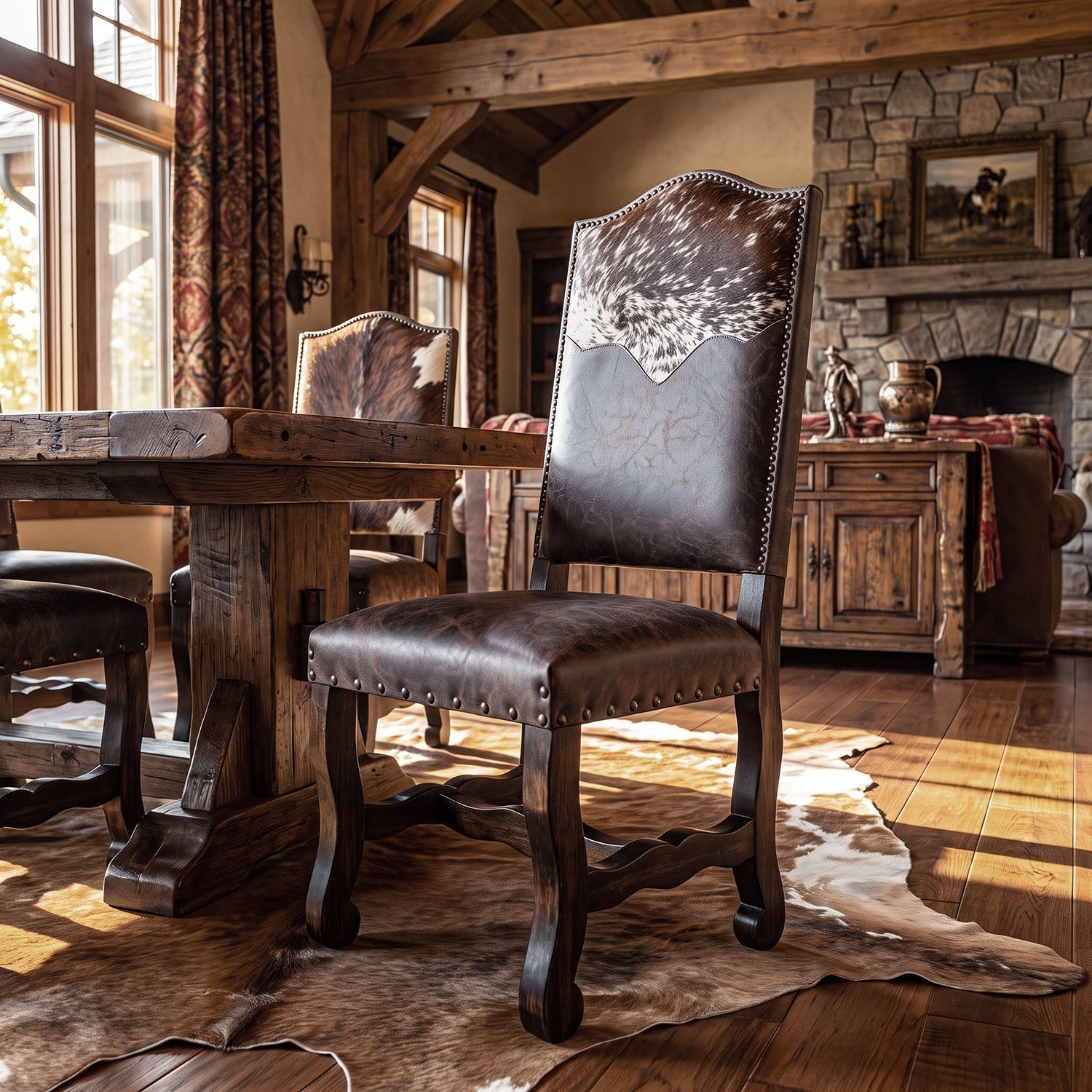
If the rug is too dark, too dense, or too visually heavy, it can pull the entire room downward. This is especially true when paired with dark leather, dark wood, and darker floors. At that point, the rug is not grounding the room. It is pinning it to the earth with unusual commitment.
A better rug gives structure without becoming a visual weight blanket.
In a darker Western room, a rug should:
• include some lighter tones or open pattern movement
• contrast enough with the floor to define the furniture zone
• soften the room rather than deepen every shadow
• support the palette without becoming the darkest object in the space
Our Western Area Rugs and Brazilian Cowhide Rugs can both work, but the choice should depend on what the room is already missing. If the room needs lift, choose accordingly. If the room already has plenty of pattern and contrast, the rug may need to be quieter.
Break up dark wood with lighter surroundings
Dark wood is one of the great pleasures of Western interiors. It adds seriousness, warmth, and permanence. It can also dominate a room quickly if it is surrounded by other dark choices with no relief.
The goal is not to avoid dark wood. The goal is to give it enough contrast to look intentional and expensive.
Dark wood looks better when paired with:
• lighter walls or plaster-toned backgrounds
• warm neutral rugs
• softer bedding or upholstery
• lamps with lighter shades
• metal or leather details that define the piece
This matters for larger categories like Western Beds, Western Consoles, Western Buffets & Sideboards, and Western Desks. Strong dark pieces need air around them, not more darkness stacked at every edge.
Use mirrors and metal thoughtfully
Reflective elements can help a dark room, but they should be used with restraint.
The goal is not to make the room shiny. A Western room that becomes too reflective can lose the grounded quality that made it appealing in the first place. But a well-placed mirror, a warm metal lamp base, an iron detail catching light, or a hammered copper accent can add lift and movement where the room feels too dense.
Good reflective helpers include:
• a mirror over a console
• hammered copper used in small doses
• warm metal lighting details
• ironwork that adds line and shadow without bulk
• lighter art frames or small accents that catch light subtly
Accent categories like Rustic Accent Tables, Western Coffee Tables, and Western Lighting are useful here when the room needs a little lift without turning flashy.
Give dark leather some breathing room
Dark leather is strong. It does not need to be crowded to make its point.
When a dark leather sofa, recliner, sectional, or chair is surrounded by dark tables, dark floors, dark walls, dark pillows, and dark rugs, the leather loses its definition. It becomes part of a larger shadow mass instead of a rich material with depth and character.
Give dark leather breathing room with:
• lighter pillows or throws
• a rug with some lighter movement
• side tables that contrast rather than disappear
• lamps placed close enough to create glow
• open space around the piece so it can register clearly
Our Western Leather Sofas, Western Recliners, and Western Sectionals are exactly the kinds of anchor pieces that benefit from this treatment. The richer the leather, the more important it is to let the room reveal it properly.
Do not let every wall carry weight
Dark rooms often feel worse when every wall is trying to participate too heavily.
Large wall art, dark framed pieces, heavy shelving, deep paint, and dense decorative groupings can all add weight at eye level. Some of that may be beautiful. Too much of it makes the room feel closed in.
To lighten the wall plane:
• use one stronger wall moment instead of several competing ones
• choose art with some air or contrast in it
• avoid crowding every vertical surface
• let certain walls stay calmer so the room can breathe
• use mirrors or lighter frames where the room needs lift
This does not mean empty walls are the goal. It means not every wall needs to act like it has something to prove.
Keep the corners from going dead
Dark corners can make an entire room feel heavier.
This happens when the center of the room has furniture and lighting, but the edges fade into shadow. The room starts feeling smaller, lower, and less inviting. Corners do not need to be overfilled, but they should not feel abandoned either.
Good corner solutions include:
• a floor lamp near a reading chair
• a small accent table with a lamp
• a tall plant or vertical element where appropriate
• a chair and textile layer to create a small destination
• a lamp on a console near a darker wall
This is where Western Accent Chairs, Western Swivel Chairs, Rustic Accent Tables, and Western Lighting can turn an unused edge into a useful moment.
Use warm neutrals instead of stark white
When a room feels too dark, the instinct may be to add white.
Sometimes that works. Often in a Western room, stark white feels too abrupt. It can make the darker materials look heavier by contrast, or worse, make the room feel like it has two unrelated personalities sharing a lease.
Warm neutrals usually work better.
Better lifting colors often include:
• bone
• cream
• oatmeal
• warm taupe
• sand
• flax
• muted clay
• soft camel
These tones lighten the room while still belonging to the Western material language. They bring relief without making the space feel disconnected from its own soul.
Edit before buying more
Sometimes a Western room feels too dark because there is simply too much in it.
Too many dark wood pieces. Too many heavy accents. Too many pillows in deep tones. Too many small objects crowding surfaces. Too many visual layers in the lower half of the room. The room may not need a new purchase first. It may need a little discipline.
Try editing:
• remove the darkest small accents first
• lighten or simplify crowded surfaces
• take away one heavy piece if the room feels blocked
• replace only the layer that is causing the most heaviness
• leave more negative space around dark anchor furniture
Our article The Western Room That Doesn’t Need More Stuff pairs naturally with this point. Sometimes the fastest way to brighten a room is not adding light. It is removing the things that are quietly eating it.
So how do you keep a Western room from feeling too dark?
By preserving depth while adding relief.
That is the whole secret.
You keep the leather, the wood, the iron, the texture, the warmth, and the mood. But you give those elements contrast, lift, glow, and breathing room so they can actually be appreciated.
The best fixes usually include:
• stronger layered lighting
• lighter textiles near dark anchors
• rugs that ground without dragging the room down
• warm neutrals instead of stark white
• reflective details used with restraint
• breathing room around dark leather and wood
• calmer walls and better-lit corners
• editing before adding more
A Western room should feel rich, not heavy. Warm, not dim. Grounded, not buried. There is a meaningful difference, and the room knows it even when nobody else has admitted it yet.
When the balance is right, darker Western materials become an asset again. They add depth, soul, and authority. They make the room feel settled and substantial.
They just need enough light around them to avoid turning the whole space into a handsome cave with seating.
More Design Guides:


Share:
How to Make an Open Floor Plan Feel More Western
The Most Useful Western Furniture Pieces in the House