


Beauty gets most of the attention in furniture.
Usefulness tends to work quietly in the background.
Yet the pieces people grow most attached to are rarely useful by accident. They are the console that catches the keys before they disappear into the household wilderness. The swivel chair that turns toward the fire, the conversation, or the view without requiring a small furniture relocation. The bench that seats guests, holds a blanket, finishes a hallway, and still manages to look as though it has done nothing strenuous all day.
That is the difference between furniture that merely occupies a room and furniture that improves the way the house lives.
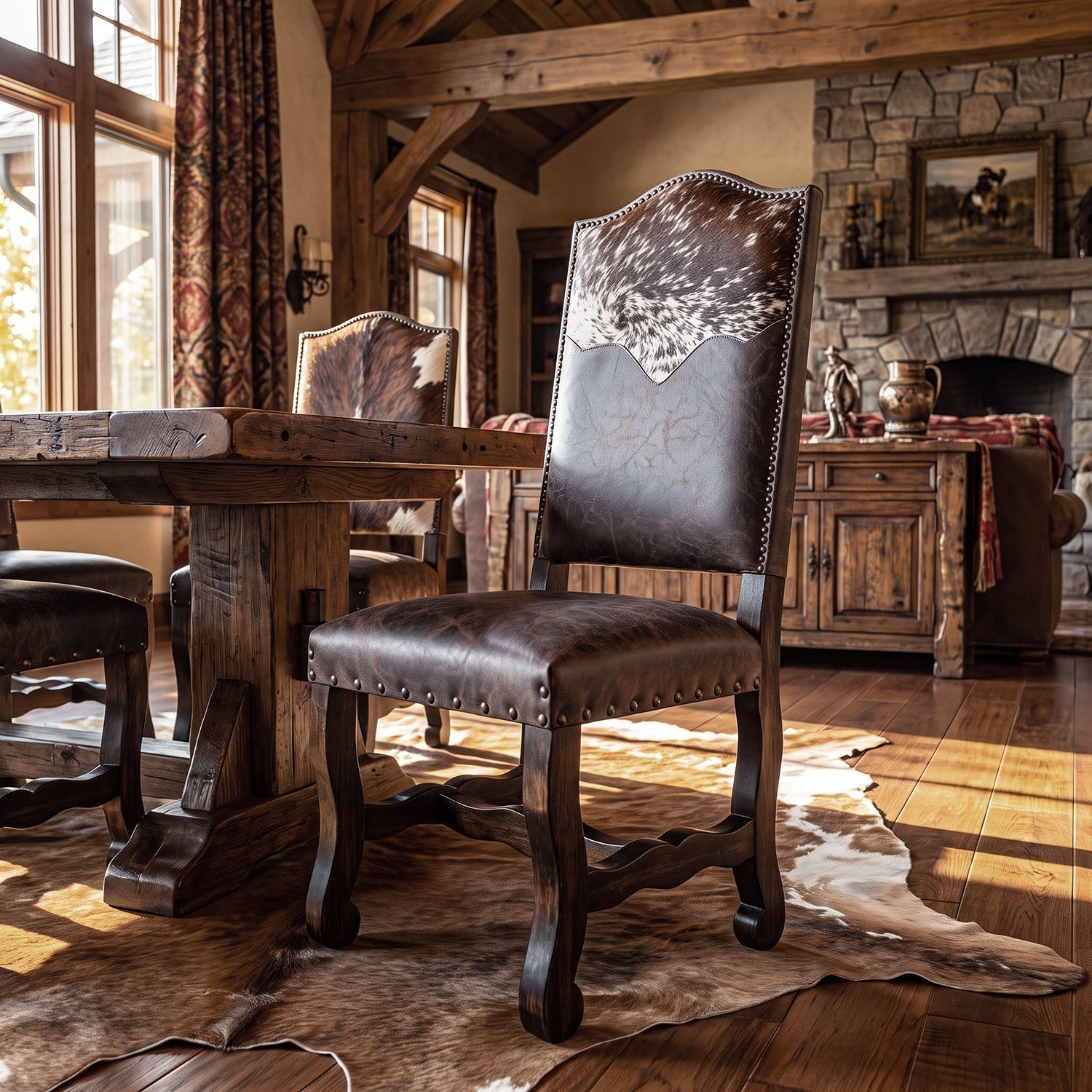
In a Western home, usefulness should never mean plain or forgettable. The best hardworking pieces still carry character: richly grained wood, honest leather, hand-forged iron, carved detail, warm patina, and proportions substantial enough to belong in a ranch estate, lodge, mountain home, or refined Texas interior. They simply earn their beauty twice—once through presence and again through service.
This matters because large homes can collect furniture faster than they collect function. A room may have plenty in it and still lack the one surface, seat, storage piece, or flexible element that would make daily life noticeably easier.
The most useful Western furniture is not necessarily the largest or most dramatic. It is the furniture that solves recurring problems without making the room feel utilitarian. It supports hospitality, movement, storage, comfort, and ordinary routines while still strengthening the atmosphere of the home.
If you are deciding where to invest next, these are the Western furniture pieces that tend to earn their keep in nearly every room of the house.
The console table: the house’s quiet problem-solver
A good console table may be one of the hardest-working pieces in the entire home.
In an entry, it creates a sense of arrival and gives everyday objects somewhere respectable to land. Behind a sofa, it helps define a conversation zone and supports lighting. In a hallway, it turns an empty passage into a purposeful transition. In a dining room, it can hold serving pieces, lamps, or seasonal layers without requiring the visual weight of a full buffet.
A console can serve as:
• an entry landing place
• a sofa-back boundary in an open floor plan
• a display and lighting surface
• a narrow serving station
• a visual anchor beneath art or a mirror
The best consoles are shallow enough to preserve circulation but substantial enough to feel architectural. They should not look apologetic against a long wall. In a Western home, wood grain, carved fronts, iron bases, leather detailing, or warm aged finishes give the piece enough authority to shape the space around it.
Our Western Consoles collection is a natural starting place because this category can solve entry, hallway, dining, and living-room needs without asking for excessive floor space.
The swivel chair: flexible seating that changes with the room
A stationary chair supports one direction. A swivel chair supports the way people actually live.
It can turn toward a sofa during conversation, toward a fireplace in the evening, toward the television when needed, or toward a window when the room grows quiet. This flexibility makes swivel chairs especially useful in open floor plans, great rooms, and spaces with more than one focal point.
A swivel chair works particularly well:
• between connected living zones
• near a fireplace and conversation grouping
• in bedrooms with both a bed and a view
• in reading areas that open toward the larger room
• where fixed furniture would make the layout feel rigid
The important thing is choosing one with real support and enough visual weight to hold its position. A chair that swivels beautifully but feels undersized or flimsy has solved the least important part of the assignment.
A strong option from our Western Swivel Chairs collection brings movement without sacrificing the leather, hide, texture, and tailored presence expected in a Western room.
The bench: useful almost everywhere
Few furniture pieces move through a house as easily as a bench.
At the foot of a bed, it provides a place to sit, set bedding, or finish the visual weight of the room. In an entry, it supports boots, bags, and the ordinary mechanics of leaving the house. In a dining room, it can increase seating while softening a formal arrangement. In a hallway or beneath a large work of art, it gives an otherwise empty stretch of wall purpose.
Useful bench locations include:
• bedroom footboards
• entries and mudrooms
• dining tables
• long hallways
• beneath windows
• dressing areas
A Western bench can also carry considerable character through leather, hide, embossing, carved wood, fringe, iron, or storage. The best examples do not feel like secondary seating. They feel like complete furniture pieces that happen to perform five jobs while being accused of merely sitting there.
Our Rustic Dining Benches collection is useful beyond dining alone. Many of those proportions and materials can work beautifully in bedrooms, entries, and gathering spaces as well.
The accent table: small footprint, constant service
Accent tables are often treated as decorative filler. That is a mistake.
A properly placed accent table solves one of the most common failures in living spaces: comfortable seating with nowhere useful to set anything. A chair may be excellent, but if the nearest surface requires a meaningful lean and a favorable wind, the arrangement is not finished.
An accent table can provide:
• a reachable surface beside a chair
• a home for a lamp
• a place for a drink, book, or glasses
• visual balance beside larger upholstery
• a small material statement in wood, copper, iron, stone, or hide
The most useful accent tables are stable, correctly scaled, and close enough to the seat they serve. They should not be so delicate that setting down a glass feels like a test of character.
Our Rustic Accent Tables collection gives this practical category far more presence through carved bases, hammered copper, ironwork, reclaimed wood, and sculptural forms.
The buffet or sideboard: storage with authority
A buffet or sideboard does much more than support a dining room.
It stores serving pieces, linens, glassware, barware, games, electronics, office supplies, or the household objects no one wants visible but everyone wants nearby. It also provides a substantial surface for lamps, art, serving, seasonal arrangements, or entertaining.
Buffets and sideboards work well in:
• dining rooms
• great rooms
• long entries
• home offices
• media spaces
• wide hallways
In a Western interior, these pieces can become some of the strongest craftsmanship statements in the house. Carved doors, leather fronts, reclaimed wood, aged finishes, forged bases, and substantial hardware give the storage real architectural value.
The key is choosing a piece with storage that matches the actual need. Shelves work well for serving pieces and books. Drawers handle smaller objects. Cabinets conceal the visual evidence that households own cables, remotes, and instruction manuals despite their best intentions.
Our Western Buffets & Sideboards collection offers the kind of capacity that helps rooms stay calmer without making storage feel like an institutional requirement.
The leather ottoman: seat, footrest, table, and soft anchor
An ottoman is one of the most adaptable pieces in a living room.
It can soften a room filled with wood and iron, provide a place to put your feet, create occasional extra seating, or serve as a coffee table when topped with a stable tray. In front of a chair, it completes a reading or relaxation zone. In the center of a seating arrangement, it makes the room feel more relaxed and approachable than a hard-edged table might.
A useful ottoman may serve as:
• a footrest
• occasional seating
• a soft coffee table
• a place for a tray or books
• a material bridge between seating pieces
Leather is especially effective because it has enough substance to stand up visually while becoming more characterful through use. Hair-on-hide, tooled leather, smooth leather, nailhead details, or storage construction can make the piece both useful and unmistakably Western.
Our Leather Ottomans and Footrests collection offers a practical way to introduce comfort and flexibility without adding another full chair to the room.
The nightstand: small furniture with an important job
Nightstands are easy to underestimate because they are expected to behave quietly.
Yet a bedroom without proper nightstands often feels temporary, even when the bed is impressive. They hold lighting, books, water, glasses, charging devices, medication, and the small objects involved in ending and beginning each day. That is a significant job for a piece commonly selected near the end of the process.
A useful nightstand should have:
• enough surface for a properly scaled lamp
• storage suited to the household’s routine
• a height that relates comfortably to the mattress
• enough visual weight to support the bed
• room for essentials without requiring a nightly archaeological dig
Matching nightstands are not mandatory, but the pair should feel balanced in scale and relationship. In Western bedrooms, carved wood, iron, leather, copper, or warm distressed finishes can add depth without making the room feel overfurnished.
Our Western Nightstands collection is central to making a bedroom function as well as it looks.
The coffee table: the center of everyday living
A coffee table often becomes the practical center of the living room, whether anyone formally appointed it or not.
It holds drinks, books, trays, games, remotes, serving pieces, and the evidence of an evening currently in progress. It also determines how grounded the seating group feels. Too small, and it looks disconnected. Too large, and the room becomes an obstacle course with upholstery.
A useful coffee table should:
• be reachable from the main seating
• provide enough surface for the room’s habits
• relate properly to the sofa’s scale
• preserve comfortable circulation
• add material strength without overwhelming the arrangement
Storage coffee tables and trunk-style forms are particularly useful when a room needs to conceal blankets, games, or media items. Round tables can improve traffic flow. Rectangular tables often serve larger sofas and sectionals more effectively.
Our Western Coffee Tables collection brings utility together with copper, reclaimed wood, carved details, iron, storage, and substantial ranch-scale proportions.
The desk and desk chair: a real place to handle real life
Not every household needs a formal office. Nearly every household needs a legitimate place to sit down and handle paperwork, schedules, correspondence, planning, or focused work.
A proper desk turns an improvised task into a contained one. A proper desk chair makes that task less physically regrettable.
A useful work zone needs:
• enough surface for the work being done
• storage that prevents constant clutter
• lighting suited to focused tasks
• a chair with real back and seat support
• placement that feels connected to the home rather than exiled from it
Western desks and desk chairs can give a work area warmth and authority without making it feel corporate. Rich wood, leather, iron, carving, nailheads, and strong proportions allow the zone to belong naturally within the rest of the house.
Our Western Desks and Western Desk Chairs collections support the practical side of the home without abandoning its material character.
The bar cart: mobile usefulness beyond the bar
A bar cart is far more useful than its name suggests.
It can certainly hold bottles, glassware, ice buckets, and serving pieces. It can also become a coffee station, dessert cart, guest-room refreshment stand, dining-room overflow surface, bathroom linen station, or movable storage piece during entertaining.
A bar cart can be used as:
• a traditional beverage station
• a coffee or tea service
• a mobile dessert station
• extra dining-room storage
• a guest-room hospitality piece
• a movable side table during gatherings
The wheels matter. So does stability. A bar cart should move when asked and remain still when not, a standard that applies surprisingly well beyond furniture.
Our Rustic Bar Carts collection gives this flexible piece enough wood, leather, iron, and handcrafted presence to feel permanent even while remaining mobile.
The most useful piece depends on the problem
Furniture becomes genuinely useful when it solves the correct problem.
A console will not fix a living room with inadequate seating. Another chair will not solve a bedroom with no bedside storage. A buffet may be beautiful, but it will not help if the real frustration is that every seat lacks a nearby table.
Match the piece to the recurring problem:
• clutter near the entrance → console
• rigid conversation layout → swivel chair
• missing occasional seating → bench or ottoman
• nowhere to set a drink → accent table
• dining or media storage shortage → buffet or sideboard
• unfinished bedroom routine → nightstand
• living-room clutter → storage coffee table
• improvised work setup → desk and supportive chair
This sounds obvious once written down. Most useful things do. The challenge is identifying the problem before buying the solution that happens to be more attractive.
Utility should strengthen the room, not merely occupy it
Useful furniture still needs proportion, craftsmanship, and visual discipline.
A piece that solves a problem but weakens the room is not a complete solution. The console must fit the wall. The bench must relate to the bed or table. The ottoman must work with the seating scale. The buffet must have enough breathing room to open comfortably. Function and beauty should not be treated as opposing departments that rarely speak.
Before adding a hardworking piece, check:
• whether its scale fits the room
• whether circulation remains comfortable
• whether the materials support the existing palette
• whether the piece solves more than one need
• whether it has enough quality to withstand frequent use
The most useful furniture usually becomes some of the most frequently touched furniture in the house. Construction and material quality matter accordingly.
The best Western homes are useful without looking utilitarian
That is the real standard.
A Western home should support boots at the door, long meals, quiet work, late conversations, overnight guests, daily routines, and the objects that inevitably gather around a life being lived. But it should do so with warmth, craftsmanship, and a sense that the usefulness belongs naturally inside the beauty.
The pieces that tend to work hardest are:
• console tables
• swivel chairs
• benches
• accent tables
• buffets and sideboards
• leather ottomans
• nightstands
• coffee tables
• desks and desk chairs
• bar carts
None of these pieces is useful merely because of its category. It becomes useful through the right size, placement, construction, and purpose.
Choose well, and the furniture begins quietly improving the household every day. The room becomes easier to use. The surfaces appear where they are needed. Storage becomes less visible. Seating becomes more flexible. Hospitality becomes less complicated.
And the home still feels rich, grounded, and unmistakably Western.
That is furniture earning its place.
More Design Guides:
The Most Expensive-Looking Material Pairings
The One Upgrade Rule: The Single Piece That Changes the Whole Room


Share:
How to Keep a Western Room From Feeling Too Dark