


Most interiors content is written for daylight.
It’s stunning at 10:30 AM with sun pouring through the windows, everything bright and crisp, every surface behaving. In daylight, a room can look incredible almost by accident. Natural light smooths over weak choices. Sunlight forgives harsh overhead fixtures. Brightness hides dead corners.
But real life doesn’t happen at 10:30 AM.
Real life happens after dark—between 7 and 11 PM—when the day is done, the lamps come on, the fire takes over, and you’re no longer “styling a room.” You’re living in it. Sitting in it. Moving through it. Hosting in it. Pouring a drink. Reading. Playing cards. Having one more late dinner than you planned.
And nighttime is honest.
A room can look spectacular during the day and still feel wrong at 9:30 PM.
• Overhead lights that flatten everything
• Corners that go dead and cave-like
• Glare on glass and metal that feels harsh
• Seating that’s beautiful but not cozy
• A dining room that feels cold at night
• An entry that feels like a tunnel instead of a welcome
This is the gap most people never address. It’s also why quiet luxury isn’t just a style—it’s a discipline. And in Western homes, it’s a huge advantage, because Western materials are made for glow: leather, iron, copper, hammered metal, reclaimed wood, stone.
This guide is the playbook for designing a Western home for nightfall. Not “brighter.” Better. Warmer. Deeper. More inviting. A home that feels better at 9:30 PM than it does at 10:30 AM.
The Real Difference Between “Daytime Pretty” and “Nighttime Incredible”
Daytime makes rooms forgiving.
Nighttime makes rooms real.
In daylight, your eyes are flooded with ambient light. Edges soften. Shadows lift. Surfaces look clean and calm. Even mediocre lighting choices feel acceptable because the sun is doing the work for you.
At night, the room becomes what you actually built:
• Where do shadows fall?
• Where do your eyes go when you sit down?
• Is there glare from bare bulbs or reflected light?
• Do you feel pulled into the room… or pushed away by harshness?
• Does the space feel gathered—or scattered?
Quiet luxury after dark has a specific signature:
• warm pools of light instead of one bright source
• gentle shadows that add depth instead of darkness
• a sense of “gather” around seating and dining
• light placed where people live, not where fixtures happen to hang
• materials that look richer at night than they do in harsh daylight
If you’ve ever walked into a room and thought, “This should feel nicer than it does,” that’s almost always a nightfall lighting problem—not a furniture problem.
The Nightfall Rule: Stop Lighting Rooms. Start Lighting Zones.
Most people light a room like a box.
Quiet luxury lights a room like a series of zones.
That’s the whole shift.
Instead of one overhead fixture trying to do everything, you create three kinds of light:
1. Ambient light (soft overall glow)
2. Task light (reading, serving, game table, work)
3. Accent light (firelight, lanterns, art, texture highlights)
When these layers work together, the room feels deep and warm. When they don’t, the room feels flat (too bright overhead) or moody in the wrong way (dark pockets + harsh glare).
Here’s the simplest rule that fixes most homes instantly:
Overhead lighting should rarely be the star at night.
It should support the room—not dominate it.
The 9:30 PM Seat Test (Do This Tonight)
Tonight—after dark—sit in your favorite seat and don’t change anything.
Just observe.
• What do you actually see?
• Is there glare?
• Is the TV wall a black hole?
• Are your eyes drawn to a harsh light source?
• Are there dead corners where the room disappears?
• Can you read comfortably without turning on the “big light”?
• Does the room feel warm, or does it feel sterile?
Now stand up and walk your main routes:
• entry → great room
• great room → kitchen
• dining → kitchen
• great room → hallway/bedrooms
If you’re stepping into shadow pockets or harsh transitions, that’s not “atmosphere.” That’s poor zone planning.
If the room feels awkward before we even touch lighting, fix the layout first. Movement is a form of luxury. This guide is the cleanest way to spot choke points and flow issues: Western Living Room Layout: Traffic Flow Tips for Great Rooms and Open Spaces
The Western Nightfall Lighting Stack (The Only System You Need)
Here’s a system that works in nearly every Western home—from modern mountain to classic ranch.
Layer 1: Ambient Glow (not brightness)
Ambient light is the low, warm base that makes a room feel safe and calm. It’s what keeps your home from feeling like a set of dark corners and spotlight beams.
Best sources:
• chandelier dimmed low (supporting role)
• warm lamps bounced off walls
• low-level lighting that makes the room readable without being bright
The goal is “glow,” not “brightness.”
Layer 2: Task Light (purposeful)
Task lighting is where function lives:
• reading chair
• game table
• desk corner
• serving station
• kitchen edge of open concept
Task light is what lets you live normally without flipping on every overhead fixture in the house.
Layer 3: Accent Light (character)
Accent light is where atmosphere happens:
• firelight
• candles and lanterns
• art lighting
• a warm highlight on hammered metal or copper
• soft glow that brings depth to texture
This is the difference between “lit” and “alive.”
Materials That Come Alive at Night (and Why Western Homes Win Here)
Western materials are naturally dimensional. At night, that dimension becomes luxury—if your lighting supports it.
Leather: depth, grain, presence
Leather is one of the best nightfall materials. In daylight, leather reads as color. At night, leather reads as presence.
A warm lamp grazing leather brings out grain and tone variation. Harsh overhead lighting makes leather look flat and plasticky.
If you ever want a simple reference for how leather, hide, wood, and metal are meant to live and age in real homes, keep this bookmarked: Materials & Care: How Our Western Pieces Live in Your Home
Hammered metal and copper: controlled sparkle
Hammered metal is basically made for nighttime lighting. It catches light in tiny reflections, adding sparkle without feeling shiny or cheap.
Copper is especially powerful in Western homes because it adds warmth even when the light is low. It reads like firelight.
Iron and blackened steel: contrast and structure
Iron doesn’t reflect much—so it frames glow. It creates crisp outlines and gives your warm light something to play against.
This is why blackened steel windows and iron bases look so good after dark: they make the room feel composed.
Glass: beautiful, but watch the glare
Glass can be gorgeous at night, but it’s also the fastest way to create glare if your bulbs are in direct line of sight.
Rule: don’t place a bare bulb where it reflects into seated eyes. Think like a seated person, not a standing person.
The Secret Weapon: Light Stations (Your Home’s “Night Infrastructure”)
A light station is a surface designed for nightfall living.
It’s not décor. It’s infrastructure.
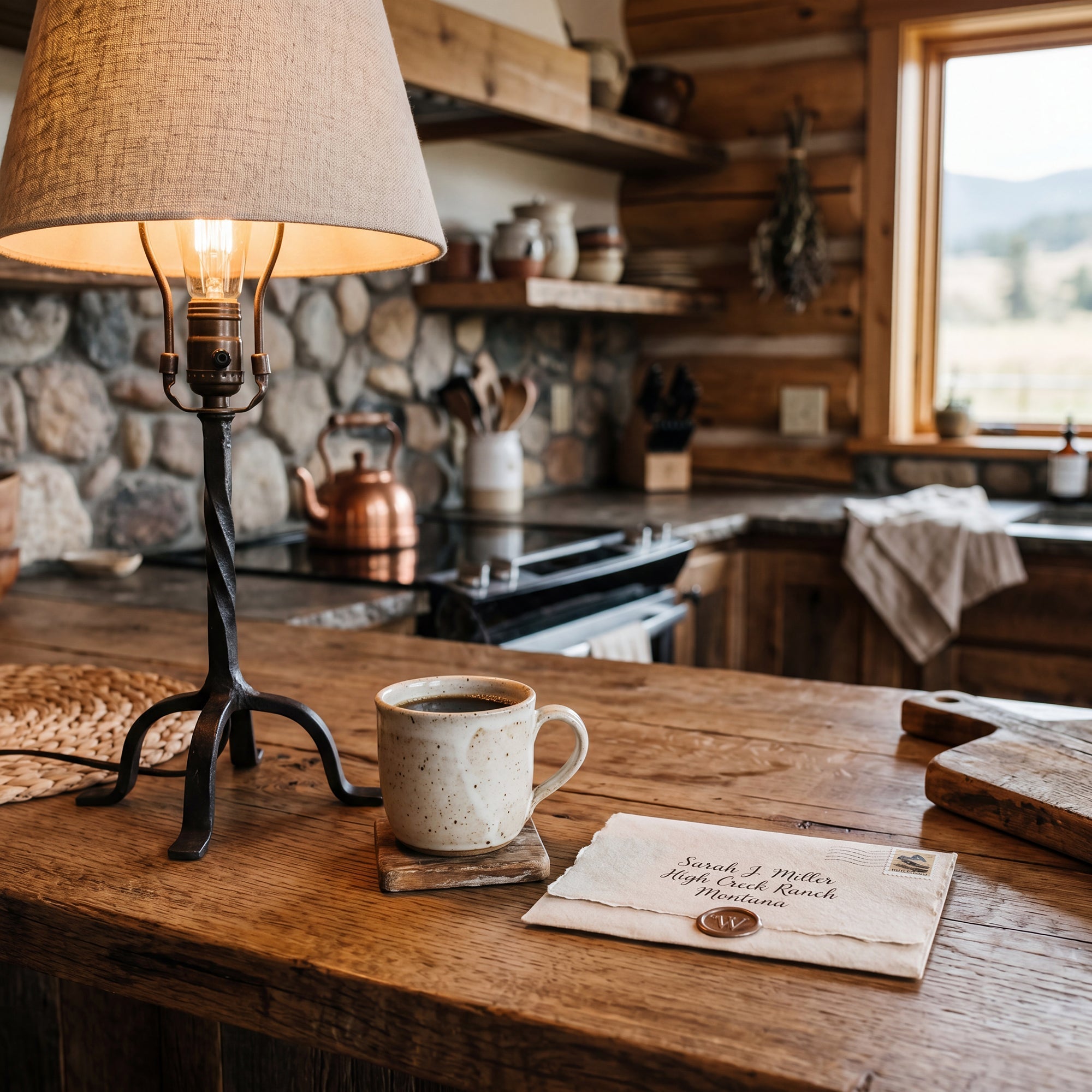
Most nightfall problems aren’t caused by a lack of lamps—they’re caused by a lack of places for lamps to live.
A light station usually includes:
• a console or sideboard
• a lamp (or two)
• one low-glow element (candle, lantern, small accent light)
• dimmers or warm smart bulbs
The best light stations in Western homes:
• behind the sofa (instant great room warmth)
• on a dining sideboard (meals feel intimate)
• in the entry (arrival feels welcoming)
• in the bedroom (calm, finished, grounded)
This is where the “One Upgrade Rule” becomes practical: sometimes the best upgrade isn’t a new sofa. It’s a console + lighting that changes the whole mood.
Room-by-Room Nightfall Design
Great Room: fireside gravity, not overhead glare
A Western great room should feel like a destination after dark.
Not a cave. Not a showroom. A destination.
Your goal:
• warm center around seating
• corners that stay alive
• overhead light dimmed to support
• every seat has a surface and access to light
What works:
• lamp on a side table near seating
• lamp(s) on a console behind the sofa (light station)
• floor lamp near a reading chair
• chandelier dimmed low
• firelight or candlelight as accent
What doesn’t:
• one overhead fixture at full brightness
• no lamps near seating
• dark corners behind chairs
• glare bouncing off TV or glass
If your great room feels “floaty” even when lit well, the rug and layout are usually the culprit. Fix flow first: Western Living Room Layout: Traffic Flow Tips for Great Rooms and Open Spaces
If the room ever starts feeling “loud” after dark, it’s usually too many hero textures competing. The texture framework is here: The Western Texture Code: Leather, Hide, Fabric, and the Art of a Balanced Room
Dining Room: make the table a pool of light
Lighting changes behavior at the table.
Bright overhead light makes dinner feel like a cafeteria. Warm layered lighting makes dinner feel like a ritual.
Your goal:
• a pool of light on the table
• softer perimeter glow
• no harsh glare
Nightfall dining formula:
• chandelier dimmed low
• sideboard lamp glow (light station)
• candles/lanterns for depth
• minimal reflective clutter
If you ever want dining to feel finished without buying ten things, the “buying timeline” approach keeps you from wasting money in the wrong order: Western Quiet Luxury on a Calendar: What to Buy First (and Why)
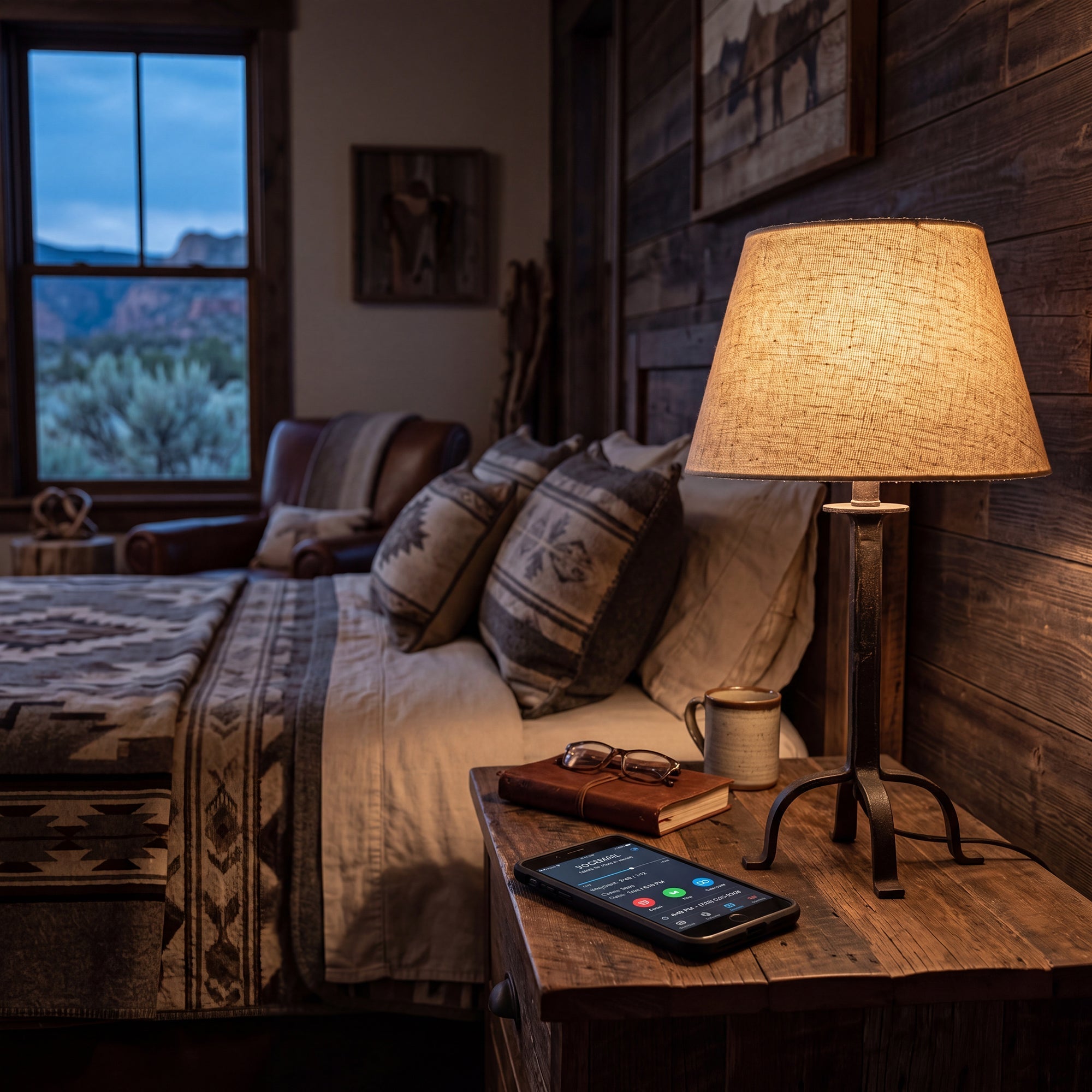
Bedroom: calm, low, warm (no stadium lights)
Bedrooms should feel like an exhale.
Your goal:
• warm low light at the bed
• no reliance on bright overhead
• gentle pathway light to closet/bath
Bedroom nightfall stack:
• two bedside lamps
• optional low accent glow
• overhead only when needed
This is where warm wood and leather look their best—quiet, grounded, not shiny.
Reference for materials aging + care (especially leather): Materials & Care: How Our Western Pieces Live in Your Home
Entry: welcome light (not a dark tunnel)
If your entry is dark, the whole home feels less welcoming at night.
Goal:
• one warm lamp glow near the door
• no harsh overhead blast
• clear path into the home
Entry formula:
• console
• lamp
• mirror/art
• one bowl/tray
A console + lamp is one of the fastest “whole-home” upgrades you can make—nightfall makes that obvious: The One Upgrade Rule: The Single Piece That Changes the Whole Room
Nightfall Rituals: Design for Real Life
The best Western rooms are built around rituals, not photos.
Common night rituals:
• fireside unwind
• late dinners
• card games
• reading
• quiet music
• slow conversation that goes longer than planned
Design for the ritual:
• task light where the action happens
• ambient glow around the perimeter
• accent light for depth and warmth
• drink surfaces within reach
Nightfall design is hospitality design.
Nightfall Mistakes (and the Fix)
Mistake: overhead lighting is the default
Fix: dim overhead, add lamps.
Mistake: dark corners
Fix: one lamp/floor lamp to bring the perimeter alive.
Mistake: glare
Fix: reposition bulbs so they’re not in direct line of sight from seated positions.
Mistake: nowhere for lamps to live
Fix: add a console/sideboard and build a light station.
Mistake: too many hero textures
Fix: give the eye a resting place. Framework here: The Western Texture Code: Leather, Hide, Fabric, and the Art of a Balanced Room
Custom: the quiet luxury way to get nightfall right
Nightfall atmosphere improves dramatically when:
• furniture is sized correctly
• materials are chosen for warmth and depth
• finishes harmonize under warm light
• hide placement is refined (impact without shouting)
Custom doesn’t have to be complicated. It’s often one or two changes. If you want the simplest way to start without overwhelm: The Custom Shortcut: The 5 Most Popular Custom Requests (and Exactly What to Ask For)
Closing: Make your home better at 9:30 PM
A Western home should feel better at night than it does in daylight.
Warm pools of light. Soft shadows. Materials that glow instead of glare. Rooms that invite you to sit down and stay.
Tonight, run the 9:30 PM Seat Test. You’ll know within minutes what your home needs next.
And if you want the simplest reference for how real materials behave over time—leather, hide, wood, metal—this is the one: Materials & Care: How Our Western Pieces Live in Your Home
If you want help sequencing your rooms, choosing anchors, or deciding where custom will save you from expensive mistakes, reach out anytime:
Yes — anytime. Call or text us at (817) 888-4890. Real people, Real guidance, No call centers.



Share:
The One Upgrade Rule: The Single Piece That Changes the Whole Room
Ranch House Dining: Chair Mixing That Still Looks Expensive