


Where Stories Live Longer Than the Meal
In every Western home, there’s one piece of furniture that quietly sees it all.
The table.
It’s where muddy boots slide under on winter nights, where bills are spread out and solved, where kids do homework, where hands are held, where grace is said, where anniversaries are toasted, where someone always laughs loud enough to wake the dog in the next room.
If the walls could talk, they’d still be second to the table.
In the West, a dining table isn’t a “look” or a seasonal purchase. It’s a long-term witness. It’s chosen with the understanding that — if you choose well, and live well — it might just outlive you.
This is the story of that kind of table.
Why the Table Matters More Than You Think
Most design advice treats the dining table like a checklist item: size, style, finish, done.
But in a Western home, the table is less about measurement and more about meaning.
It’s the place where:
• Big news is shared for the first time.
• Arguments are had and then forgiven.
• Guests who were strangers leave as family.
• Holiday rituals are repeated so many times they become muscle memory.
You can replace a rug. You can repaint walls. But the table? If you do it right, you don’t replace it. You build a life around it.
What Makes a Table “Heirloom-Grade”?
“Legacy” isn’t a marketing word. It’s a build spec.
1. Weight You Can Feel
An heirloom Western table doesn’t wobble when you lean on it. It doesn’t feel hollow when you knock on the top.
• Thick slabs of mesquite, alder, oak, or pine
• Solid trestle or pedestal bases
• Joinery that doesn’t rely on cheap hardware to stay standing
When a table is built right, you can feel it the moment you place your hand on it. It feels like it could shoulder a century without flinching.
2. Honest Materials
Nothing about it is pretending.
• Real wood, not printed laminate.
• Real iron, not plastic made to look like it.
• Real leather, copper, or hand-carving where details matter.
Western design doesn’t shy away from grain, knots, or natural variation. Those are the traits that make a table singular — not generic.
3. Craft You Can See (and Can’t See)
Heirloom tables are the ones where:
• Undersides are sanded, not splintered.
• Joints are tight and clean.
• Breadboard ends are pegged with care.
Most people will never crawl under the table to look — but you can feel when someone did the work anyway.
The First Scratch: When “Perfect” Becomes “Ours”
There’s always a moment.
Maybe it’s a dropped fork, a toy car, a serving dish with a rough bottom; something leaves the first mark on your pristine new table.
Most people panic. Western homes… don’t.
Because that first scratch isn’t damage. It’s the beginning.
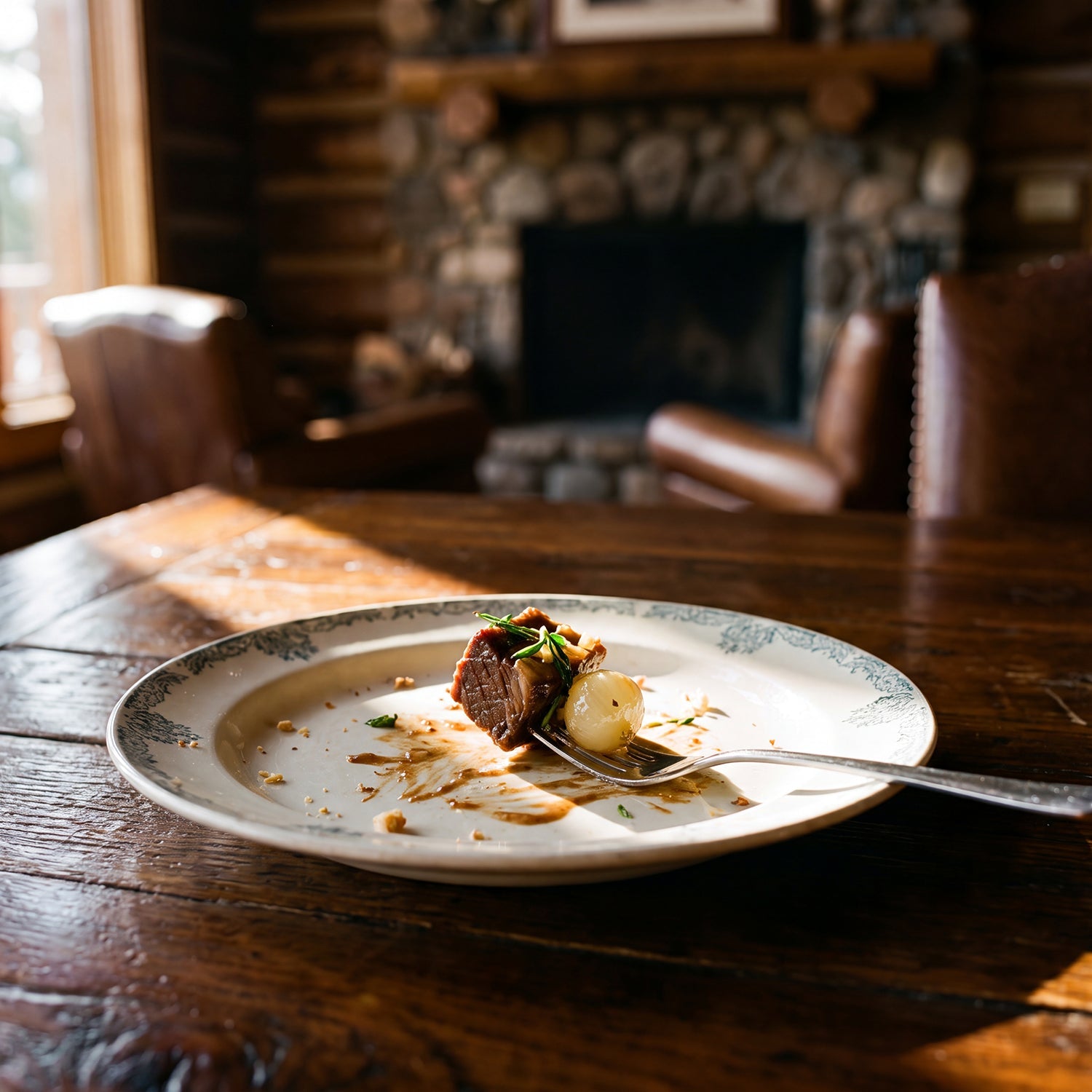
The truth is, a table that never picks up marks has never seen life. Never held elbows. Never hosted real conversation. Never had gravy spilled on it three Thanksgivings in a row.
The marks of time — faint rings, softened edges, spots where the finish has worn just enough — are not flaws. They’re a record.
An heirloom table is one you can imagine your grandkids tracing with their fingers, asking, “What happened here?”
And you smile, because you remember.
The Many Lives of a Western Dining Table
In the West, a “dining table” is rarely just for dining.
On any given week, it might be:
• A desk, buried in project plans and laptops.
• A craft table, scattered with fabric, beads, and half-finished ideas.
• A board game arena, with someone accusing someone else of cheating.
• A quiet chapel, where a single candle and a cup of coffee greet the early riser.
The right table can hold homework and wedding toasts, spreadsheets and birthday cakes, grief and joy — all on the same surface.
That’s why build quality matters. The table you choose isn’t just going to host dinners. It’s going to host decades.
How Western Design Builds for Generations
Western dining tables are distinct because they refuse to be flimsy. They’re built like the land they’re inspired by: strong, grounded, unapologetically substantial.
You’ll often see:
• Thick, hand-planed tops with softened edges.
• Trestle or double-pedestal bases — perfect for big gatherings and benches.
• Carved aprons, rope edges, or star and scroll motifs.
• Iron stretchers or accents that add stability and soul.
• Copper or inlaid details that catch candlelight and age into beautiful patina.
These aren’t “extras.” They’re the fingerprints of the craftspeople who built the table.
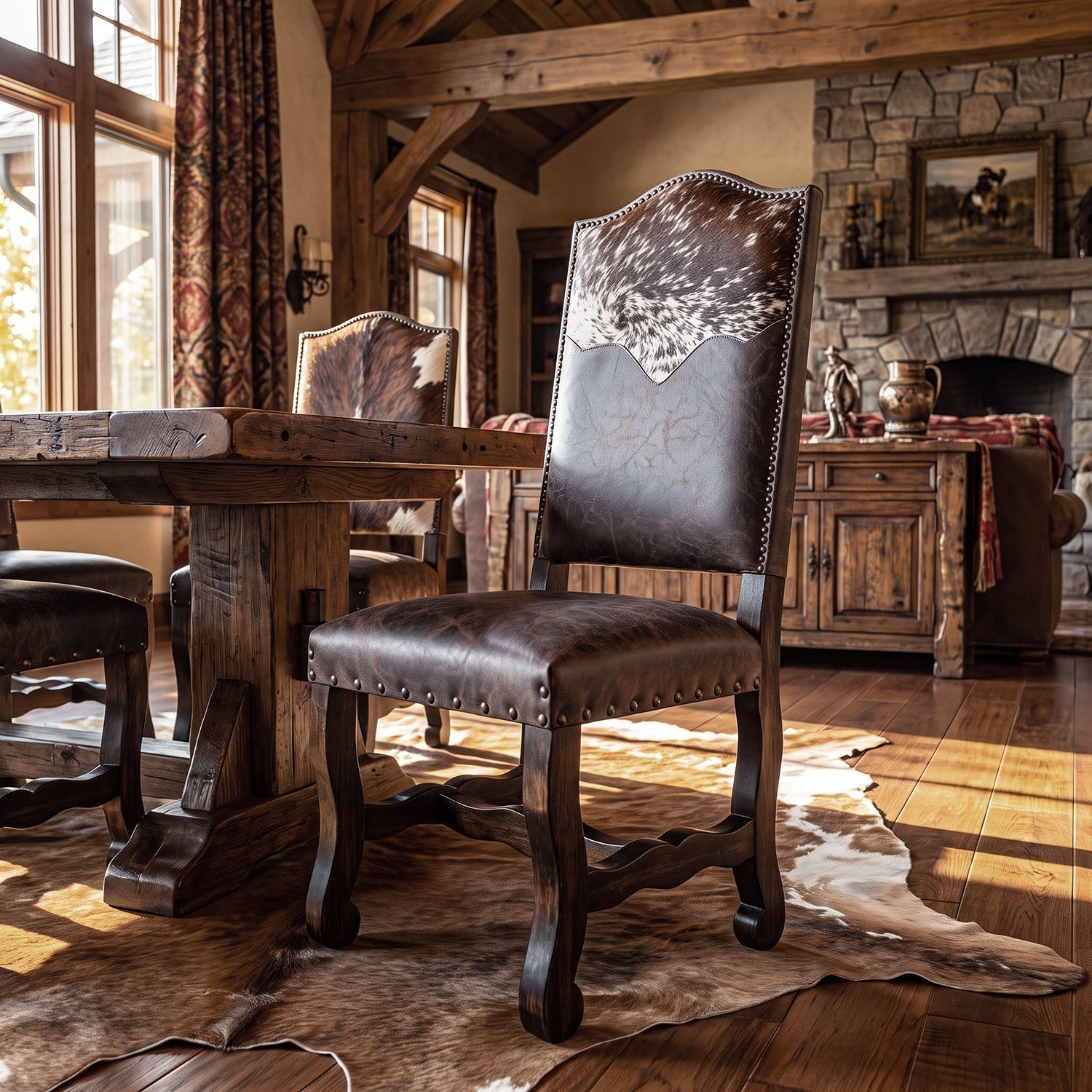
Chairs, Benches, and the Seats People Claim for Life
A legacy table rarely stands alone. The seating that surrounds it becomes part of the story too.
• The leather chair Grandpa always sat in.
• The bench where cousins squeeze together long after they’re too big for it.
• The end seat that belongs to the storyteller in the room — and everyone knows it.
Western dining chairs and benches are built with the same intentions:
• Solid frames that don’t loosen over time.
• Leather or fabric that can take real use and still look dignified.
• Details like nailhead trim, hide inlays, carved backs, or Pendleton-inspired panels that quietly signal: this is not disposable furniture.
When you choose seating with character, people remember where they sat — and how it felt.
Here’s the part nobody else says out loud:
If you’re buying a table just to fill a room, any table will do.
But if you’re buying a table to grow old with, you have to think differently.
1. Start with the Room, Not the Catalog
• Measure your space.
• Leave enough room to walk all the way around, even when chairs are pulled out.
• Think about how many people you actually host, not the fantasy version.
2. Choose Materials That Age Well
You’re not trying to preserve “like new” forever — you’re choosing surfaces that age beautifully.
• Solid hardwoods with visible grain.
• Finishes that can be touched up or softened over time.
• Tops that welcome patina instead of showing every fingerprint like a mirror.
If you have to baby a table, it won’t see the life it’s meant for.
3. Think Beyond Holidays
Ask yourself:
• Will I drink Monday morning coffee here?
• Will someone do homework here?
• Will this table see stacks of mail, laptops, dog-eared cookbooks?
If the answer is yes, good — you’re buying a table for real life, not just staged moments. Choose accordingly: sturdy, forgiving, generous in scale.
Caring for the Table That Will Care for You
Heirloom doesn’t mean indestructible. It means worth caring for.
• Wipe spills, don’t let them sit and argue with the finish.
• Use coasters when you remember — and don’t panic when someone forgets.
• Dust with a soft cloth; avoid harsh cleaners that strip character.
• If the finish wears in high-traffic spots, consider it a sign of life, not failure.
A little care, consistently given, is all these tables ask. In return, they’ll see you through seasons you haven’t even imagined yet.
Why a Western Table Is Never Just Furniture
In the end, a Western dining table is less about food and more about belonging.
It’s where “just us” becomes “all of us.”
Where kids learn to listen.
Where guests become family.
Where ordinary Tuesdays somehow turn into the stories people tell years later.
You’re not just choosing a surface.
You’re choosing the stage where your life will quietly unfold.
And if you choose well, someday someone will run their hand along the grain and say:
“This was theirs. Now it’s ours.”
That’s what it means to own a table that outlives you.
Closing Invitation
At Into The West, we believe a dining table should be more than a purchase — it should be a legacy. From hand-carved trestle tables and copper-topped beauties to solid wood slabs built for generations, our Western dining pieces are designed to host a lifetime of stories.
Because some furniture is meant to last a season.
Yours should last a lifetime.

Share:
The Western Bed: How to Choose the Heart of Your Ranch Bedroom
Beyond the Dining Room: How Western Tables Quietly Shape Every Room in the House