


The Unsung Heroes of the Western Home
When most people hear “Western table,” their mind jumps straight to the big one — the dining table where holidays happen, where stories stretch long past dessert.
But if you really walk through a Western home with your eyes open, you’ll notice something else:
It’s the smaller tables — the consoles, coffee tables, side tables, and game tables — that quietly carry the weight of everyday life.
They’re where keys land, letters are opened, books are dropped half-read, glasses find a temporary home, and quiet rituals unfold. They’re rarely the star of the room, yet they’re almost always where the day touches down.
This is the story of those tables — the ones beyond the dining room — and how they quietly shape the way a Western home feels and functions.
The Entry Console: Setting the Tone at the Threshold
Every home has a threshold — that first step inside where the outside world falls away. In a Western home, that threshold tells you almost everything you need to know in a single glance.
And more often than not, the console table is the anchor.
More Than a Surface
An entry console isn’t just “somewhere to put the mail.” It’s a signal:
• You’re welcome here.
• We thought about this space.
• We live with intention.
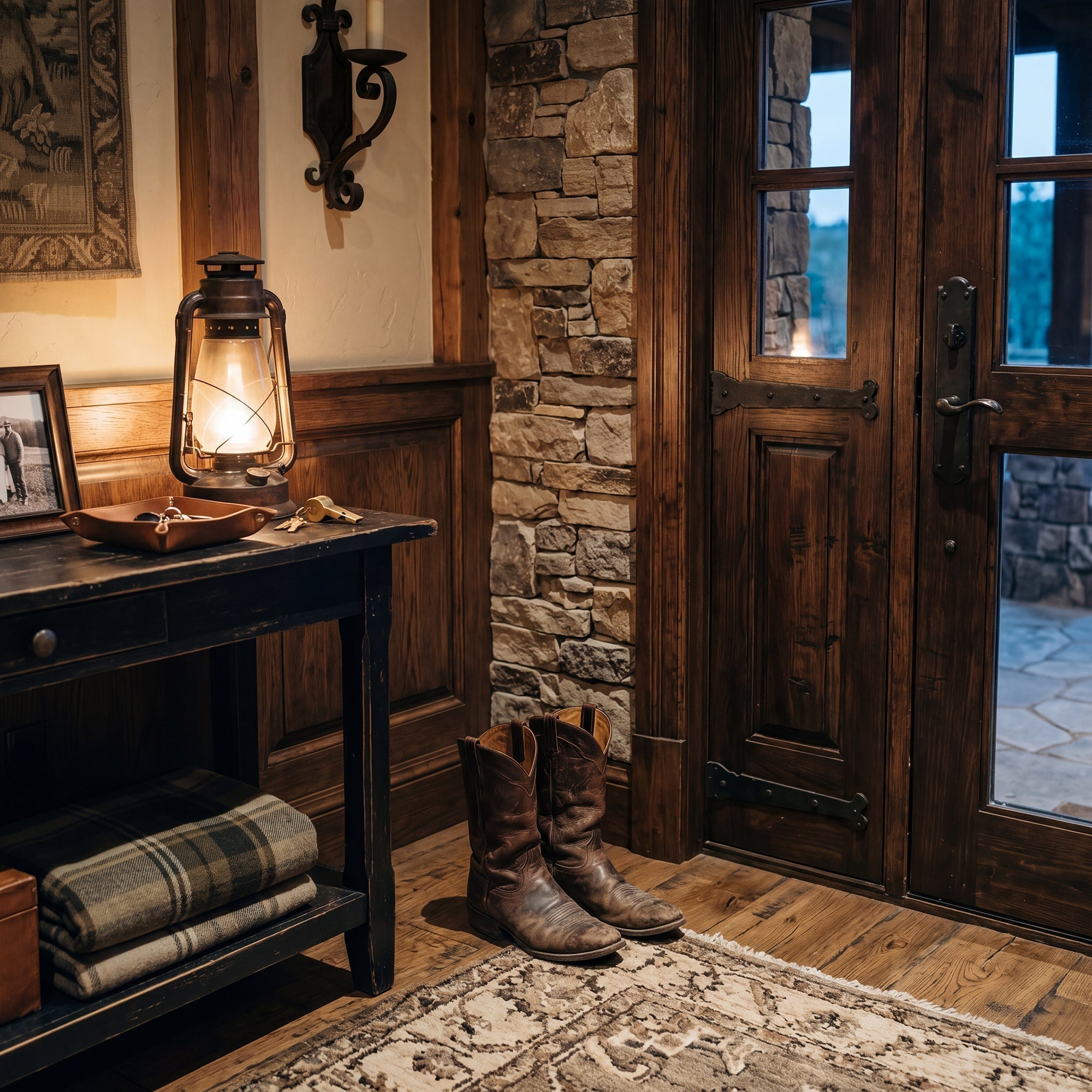
In the West, that console is usually crafted from solid wood — carved, reclaimed, or subtly distressed — sometimes paired with iron bases or copper insets that catch the light from a nearby lamp.
How to Style a Western Entry Console
Think in layers, not clutter. For example:
• A forged-iron or copper lamp with a warm, linen or leather shade
• A mirror or Western art piece above the table to reflect light and landscape
• A small catch-all bowl or silver box for keys and small treasures
• One or two personal objects — a framed photo, a piece of pottery, a small cross
That’s it. Enough to feel intentional, not so much that it looks like a display case.
The entry console is your handshake. Make it a firm one.
Coffee Tables: The Western Storytelling Ground
If the dining table holds the big occasions, the coffee table holds everything in between.
Morning coffee. Late-night conversations. Feet-up movie nights. Kids building forts out of sofa cushions and blankets that drape right over the table’s edge.
The Anchor of the Living Room
A Western living room without a proper coffee table feels like a story missing its middle. The right table:
• Grounds the seating area visually
• Brings scale and presence to the room
• Creates a central “zone” for daily living
In Western design, coffee tables often show up in:
• Reclaimed or hand-planed woods with visible grain
• Hammered copper tops that patina over time
• Iron or wood bases with subtle scroll, star, or strap details
• Round or rectangular silhouettes depending on the room’s flow
Styling a Western Coffee Table (Without Overdoing It)
A good rule of thumb: leave at least half the surface open and usable. The rest can be layered with meaning.
Try:
• A stack of books you actually love — ranch life, Western art, old family photo albums
• A low tray in wood, copper, or leather to corral remote controls, coasters, and small objects
• A small sculptural piece — a bronze horse, a piece of antler, a pottery bowl
Your coffee table shouldn’t feel staged; it should feel lived around.
Side Tables & Drink Tables: Quiet Luxury at Arm’s Reach
Here’s a design secret most people don’t talk about:
A room doesn’t feel truly finished until every seat has somewhere to set a drink.
That’s where side tables and drink tables come in — the quiet workhorses of Western comfort.
The Smallest Tables, The Biggest Difference
Tucked beside a leather chair, between two accent chairs, or at the end of a sofa, these tables:
• Prevent “orphan chairs” that look pretty but never get used
• Make guests feel considered
• Add height, texture, and interest without taking over visually
In a Western home, these smaller tables are often:
• Round or square with compact footprints
• Topped in wood, copper, or stone
• Supported by iron bases with simple curves or straight, honest lines
How to Use Them
• Place one to the side of every primary seat in your living room or den
• Keep surfaces mostly clear — one lamp, one coaster, maybe one small object with soul
• Use them to bring metal or texture into a corner that feels too flat
It’s a simple move that makes a room feel quietly generous.
Game & Poker Tables: Where the Grown-Ups Stay a Little Longer
Every Western home benefits from one space that’s unapologetically about staying up later than you meant to — telling stories, playing cards, arguing over rules nobody remembers properly.
That’s the job of the game table or poker table.
Beyond the “Formal” Dining Room
These are the tables that live in:
• A corner of the living room
• A den off the kitchen
• A loft or landing
• A dedicated game room, if you’re lucky
They’re usually:
• Round or octagonal for equal footing and conversation
• Crafted from substantial woods, sometimes with leather or hide inlays
• Paired with comfortable chairs that invite lingering, not perching
More Than Cards
Yes, poker nights and dominoes belong here — but so do:
• Puzzles spread out all winter
• Late-night chats over whiskey
• Impromptu “grown-ups’ table” overflow when holiday dinners stretch
A Western game table adds a sense of ritual to downtime. It says: this house knows how to unwind.
Bedroom Tables: Nightstands, Writing Tables & Small Retreats
In the bedroom, tables serve a quieter purpose — supporting rest, reflection, and retreat.
Nightstands: Guardians of the Night
Nightstands are more than landing spots for phones and water glasses. In a Western bedroom, they anchor the bed and frame the entire room.
Look for pieces with:
• Solid wood frames and real weight
• Drawers or shelves for books, journals, or reading glasses
• Details like carving, iron hardware, leather or copper panels
On top, keep it simple:
• A lamp with warm light
• A book or two
• Maybe a small tray or silver box for jewelry and watches
That’s enough. The nightstand’s job is to bring both comfort and calm.
Writing Tables & Small Desks
If you have the space, a small writing table or desk in the bedroom becomes an instant sanctuary — a place to journal, read, or handle life admin away from the chaos.
A Western writing table might feature:
• Slender but solid wood legs
• A smooth top big enough for a laptop and notebook
• One or two drawers for pens, letters, or keepsakes
Pair it with a comfortable accent chair and a lamp, and you’ve created a private retreat with just two pieces.
Hallway Consoles, Sofa Tables & Other In-Between Surfaces
Not every important table sits in a “main” room. Sometimes, the pieces that transform a house live in the in-between spaces:
• The hallway console that breaks up a long stretch of wall
• The sofa table behind a couch that gives lamps and décor a home
• The landing table in a stairwell holding a lamp and framed photo
These tables:
• Prevent spaces from feeling empty or forgotten
• Give you chances to repeat materials (wood tone, metal finish, motif)
• Carry rhythm through the home without making it feel crowded
They’re the little visual bridges that make a home feel coherent instead of choppy.
Styling Principles for Western Tables (Any Room)
No matter where the table lives, a few simple principles keep everything feeling Western, elevated, and intentional.
1. One Strong Material, One Soft Texture, One Personal Object
For almost any table, try this formula:
• Strong Material: wood, copper, iron, stone
• Soft Texture: leather, wool, linen, hide, or a small folded textile
• Personal Object: a photo, a book, a piece of art or faith
That balance keeps the look grounded, tactile, and personal.
2. Let Surfaces Breathe
Not every flat surface needs to be full. In fact, Western homes feel more luxurious when there’s space.
• Leave room for a coffee cup, a book, a hat, a hand.
• Resist the urge to cover every inch with décor.
• Curate, don’t cram.
3. Repeat Motifs and Finishes
Tie the home together subtly:
• If your entry console has iron and dark wood, maybe your coffee table echoes one of those elements.
• If you use copper on an accent table, repeat copper in a lamp base or bowl somewhere else in the room.
• If stars, rope edging, or scrollwork appear in one piece, let them show up again once or twice, but not everywhere.
The goal is harmony, not matching sets.
Why Tables Are the Backbone, Not the Background
Walk through a Western home and pay attention to where your hands and eyes land:
• The console where you drop your keys.
• The coffee table where you set a drink.
• The side table that holds the book you meant to finish.
• The nightstand that sees the last light of the day.
• The game table where someone laughs a little too loud at midnight.
These tables aren’t shouting for attention. But they’re holding up the rituals that make a house feel like a home.
Tables are where life lands.
Beyond the dining room, they quietly support the hellos, goodnights, yeses, maybes, and “one more story before bed.”
When you choose Western tables with soul — carved, hammered, forged, and built to last — you’re not decorating.
You’re giving your daily life a place to land with dignity.
Closing Invitation
At Into The West, we believe the strongest homes are built on pieces with purpose. From hand-carved entry consoles and hammered copper coffee tables to side tables, poker tables, and nightstands, our Western tables are crafted to do more than fill space — they’re made to support the rituals that make life rich.
Because in a Western home, a good table doesn’t ask to be noticed.
It just quietly does its job — year after year, story after story.
Share:
The Table That Outlives You: Why Western Dining Tables Are Built for Legacy
5 Western Tables That Change a Room Without a Full Redesign