


Where the West Meets Home
There’s a moment in every Western home — usually right around sunset — when the light hits the wood just right, the leather softens into a warm glow, and the room feels less like a collection of furniture and more like a story being told.
Transforming a space isn’t about filling a room with décor. It’s about shaping an atmosphere that feels lived-in, loved, and layered with meaning. Western style does this better than anything else — because it draws from the land itself: rugged mesas, warm earth, hammered copper, weathered hide, forged iron, and the quiet hum of heritage.
Whether you’re designing your first Western-inspired room or refining a home that already carries the spirit of the frontier, this guide will help you create a sanctuary that blends comfort, craftsmanship, and artistry — in a way that feels unmistakably you.
The Heart of Western Décor: Beauty Rooted in Nature
Western design has always been about an honest conversation between home and land. It carries the dust, the color, the silence, and the soul of the West — and brings them indoors with purpose.
Natural Materials That Tell the Truth
The backbone of Western style is authenticity:
• Wood that still shows its knots and history.
• Stone that grounds a room with quiet strength.
• Leather that softens with age like a well-worn saddle.
• Iron & Copper that glow under warm light.
These aren’t materials chosen for trend — they’re chosen for permanence.
An Earth-Driven Color Palette
Western rooms feel like landscape paintings — layered, warm, and alive:
• Deep browns, rusts, ochres, and greens anchor the space.
• Pops of turquoise, terracotta, and copper mimic sky and desert.
• Warm metals like bronze bring quiet elegance.
This palette doesn’t overwhelm. It settles the room into calm, grounded beauty.
Patterns With Heritage
Southwestern and Native-inspired geometric patterns — woven into rugs, blankets, and upholstery — add rhythm and cultural depth. Each pattern feels like a story woven through time.
Western Furniture Styles: A Tour Through the Territory
Western furniture isn’t one aesthetic — it’s a frontier of styles, each with a unique soul. Here’s how they differ — and how to choose the one that fits your home.
1. Rustic Western — The Original Spirit
Rustic Western design is where it all began — handcrafted, rugged, and rich with character.
It’s:
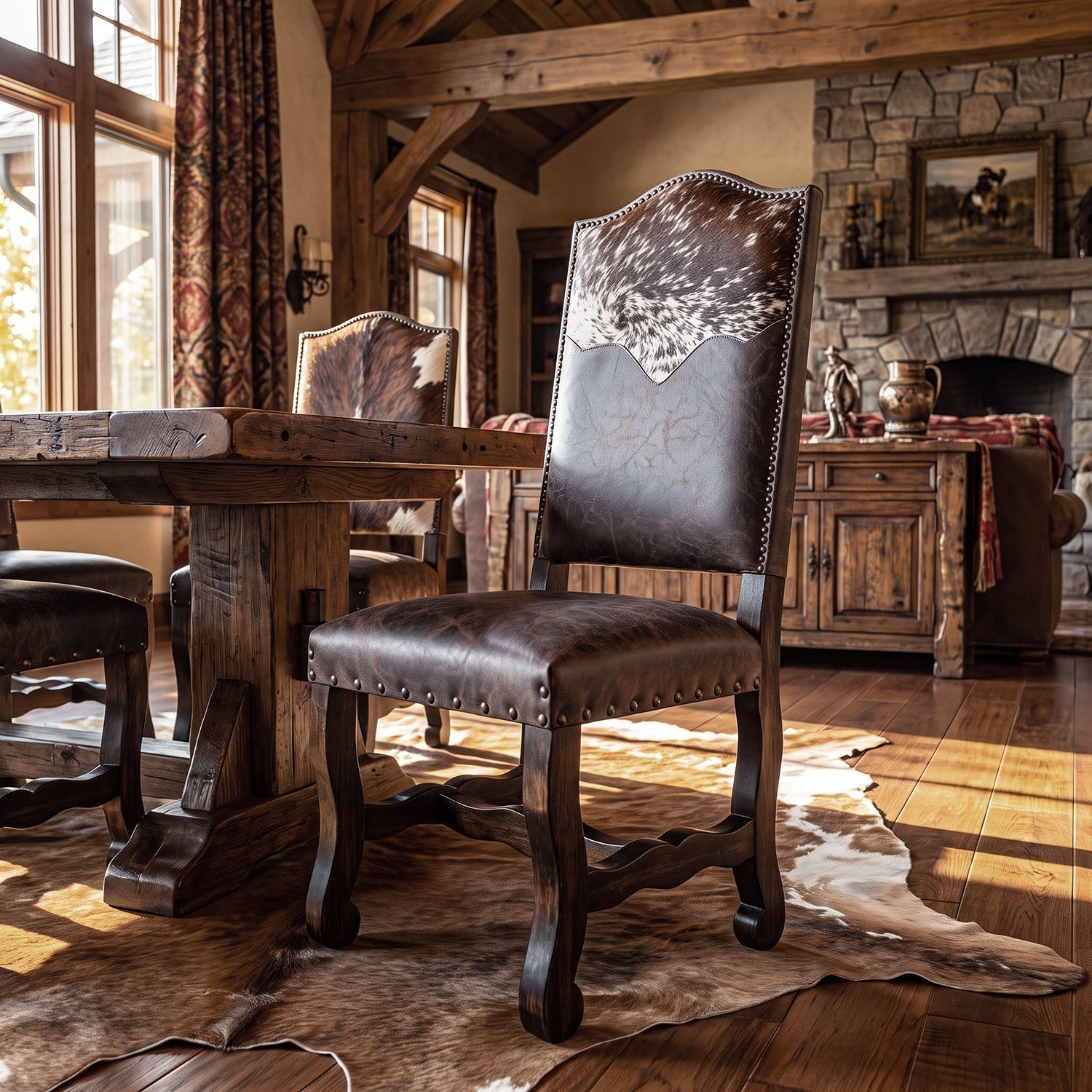
• Reclaimed wood still bearing old scars
• Distressed leather chairs that welcome you with a creak
• Iron hardware that feels sturdy and storied
• Hand-carved details that honor craftsmanship
This style creates a retreat that feels grounded, warm, and deeply authentic — like a mountain lodge or century-old ranch house.
2. Southwestern — Color, Culture & Bold Character
Southwestern style blends Spanish, Mexican, and Native influences into a look that’s vibrant and deeply cultural.
Think:
• Warm wood tones paired with bold, rich colors
• Turquoise, red clay, sun-baked gold
• Wrought iron, tooled leather, and hand-painted pottery
• Patterns that feel alive
This is for the homeowner who wants color, energy, and heritage woven into every corner.
3. Modern Western — Style for the New West
Modern Western isn’t rustic. It’s refined — clean lines with Western soul.
Picture:
• Streamlined leather sofas
• Sleek iron bases
• Glass or copper-trimmed tables
• Minimalist silhouettes wrapped in natural textures
It’s Western elegance: contemporary, elevated, and quietly luxurious.
Rustic vs. Modern Western — Which One’s Calling You?
Here’s the truth: most homes don’t have to choose. The magic lies in the blend.
Rustic Western Says:
• Warmth
• Comfort
• Heirloom character
• “Sit. Rest awhile.”
Modern Western Says:
• Clean
• Refined
• Architectural
• “Less clutter, more soul.”
Together?
Perfection.
A hand-carved console under a modern chandelier.
A streamlined leather sofa paired with a reclaimed wood coffee table.
A polished copper lamp against rough-cut stone.
That blend — old and new — is where today’s Western interiors shine.
Essential Elements of Western Décor
1. Natural Materials First
Wood, leather, stone, and iron are non-negotiables. They bring the land indoors.
2. A Warm, Grounded Color Palette
Aim for earth first, accents second.
3. Textiles With Texture & Story
Look for:
• Woven wool
• Thick cotton
• Pendleton®–inspired blankets
• Leather & cowhide
• Hand-loomed rugs
Every textile should add warmth, rhythm, or history.
4. Layers, Not Clutter
Western homes feel curated, not busy.
Layer textures, not tchotchkes.
Keep the eye moving, not overwhelmed.
Choosing Your Western Color Palette
Start with the land:
• Sand
• Clay
• Pine
• Mesquite
• Sunset
Let these tones form your base — warm browns, soft beiges, olive greens, and rust.
Then add accents sparingly:
• Turquoise for life
• Terracotta for warmth
• Copper & Bronze for glow
The result? A palette that feels timeless, natural, and effortlessly Western.
Textiles & Patterns: The Soul of Western Comfort
Your textiles are where the Western room finds its heartbeat. Mix textures boldly:
• A Pendleton-style throw over a leather chair
• A cowhide rug layered over wood floors
• Woven wool pillows against a soft fabric sofa
Patterns should feel intentional, not chaotic. Let bold pieces shine and quieter ones support.
Accessorizing the Western Home
Accessories are where soul shows up. Choose pieces that feel handcrafted, storied, or natural.
Beautiful choices include:
• Hand-thrown pottery
• Iron candleholders
• Woven baskets
• Western photography or art
• Copper bowls
• Antler accents
• Carved crosses
• Leather-bound books
Your décor shouldn’t look mass-produced. It should look chosen.
Lighting: The Western Glow
Lighting shapes everything.
Choose warm, golden light (never cool white). Let your fixtures be part of the story:
• Forged iron chandeliers
• Copper lamps
• Lantern-style pendants
• Leather-shaded table lamps
A Western home glows — it never glares.
Caring for Western Furniture
Western furniture is heirloom furniture. Treat it like a future family treasure.
Wood
• Dust gently
• Use wood-safe cleaners
• Avoid direct sun
Leather
• Condition periodically
• Keep away from heat
• Blot spills immediately
Rugs & Textiles
• Vacuum regularly
• Rotate seasonally
• Spot-clean gently
These small habits make a lifetime of difference.
Creating a Western Space That Feels Like You
In the end, Western décor isn’t about copying a look — it’s about creating a feeling.
A Western-inspired home should be:
• Warm
• Honest
• Grounded
• Personal
• Full of story
Blend textures. Layer materials. Choose pieces with soul. And create a space that feels lived-in, not staged.
That’s the real West.
That’s the real you.

Share:
How to Choose the Perfect Western Dining Table: A Complete Ranch Home Guide
The Western Bed: How to Choose the Heart of Your Ranch Bedroom